Home / Industry & Market Dynamics / The Top Uses of Hydrogen Power: Latest Breakthroughs and Developments

The Top Uses of Hydrogen Power: Latest Breakthroughs and Developments

Hydrogen: The Clean Energy Game-Changer

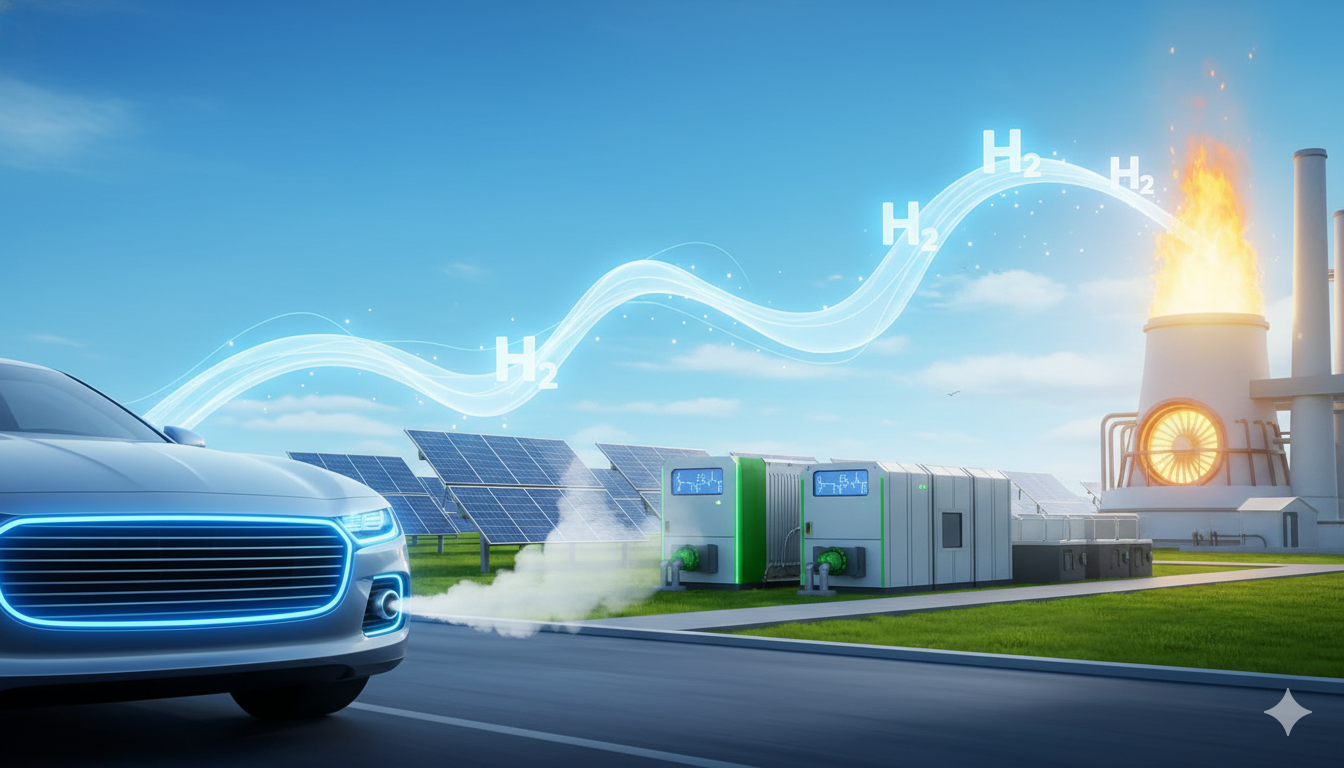
In the race to reach net-zero emissions, one fuel is capturing the world’s imagination—and investment dollars—like no other: hydrogen. In particular, green hydrogen, produced using renewable energy, is emerging as a versatile and powerful energy carrier that emits nothing but water vapor when consumed. Its appeal goes beyond being clean—it can store surplus renewable energy, be transported over long distances, and replace fossil fuels in some of the toughest sectors to decarbonize.

Once seen as a distant dream, hydrogen is now powering passenger trains in Europe, fueling pilot fleets of hydrogen trucks, heating homes in experimental communities, and even making inroads into aviation and shipping. “Hydrogen has the potential to do for the energy transition what the microchip did for the digital revolution—transform everything,” says Jules Verner, a senior analyst at Clean Energy Futures. This transformation isn’t just technological—it’s systemic, linking renewable power generation, industrial production, and transport in ways that could fundamentally reshape global energy flows.

From the fiery heart of steel mills to the precision-engineered engines of next-generation aircraft, hydrogen is infiltrating industries long considered impossible to green. We’re witnessing the shift from lab-scale prototypes to real-world deployments—proof that the hydrogen economy is no longer a concept, but a rapidly building reality.

Hydrogen-Powered Trains: The Future of Rail

Rail networks are one of the clearest examples of hydrogen’s transformative potential. In Europe, Alstom’s Coradia iLint—the world’s first hydrogen passenger train—has moved beyond its German debut, now serving routes in Austria, France, and Italy. The latest models boast enhanced fuel cells with a range of up to 1,200 kilometers, eliminating the need for diesel locomotives on non-electrified lines. The UK’s HydroFLEX project is in advanced trials, and India has set its sights on launching its first hydrogen-powered train by 2025. These developments mark a decisive step toward a cleaner, quieter rail future.

Alstom’s Coradia iLint made history as the world’s first hydrogen passenger train, swapping diesel for fuel cells that produce nothing but water as a byproduct. Operational in Germany since 2018, and now running in Austria, France, and Italy, the trains boast a range of 1,000 kilometers per tank—making them ideal for regional routes where full electrification is impractical.

“Alstom has taken the lead in supporting rail operators’ environmental transformation with unmatched green solutions,” says Michael Keroullé, President of Alstom Americas. It’s not just a technological milestone—it’s a rolling showcase of how rail can be both sustainable and scalable.

Green Steel: Decarbonizing Heavy Industry

Steel—the backbone of modern infrastructure—comes with a heavy carbon cost. Responsible for roughly 7% of global CO₂ emissions, traditional steelmaking has long been one of the toughest industrial processes to decarbonize. But now, a hydrogen-fueled revolution is reshaping the industry, and the pace of change is accelerating.

In Sweden, H2 Green Steel is building what will be the world’s first large-scale fossil-free steel plant powered entirely by green hydrogen. This isn’t just a pilot or a small demonstration—it’s an industrial-scale reimagining of how steel is made. The impact is already tangible. SSAB, working with the HYBRIT consortium, delivered the first commercial batch of hydrogen-produced steel to Volvo, marking a milestone that industry watchers once thought was decades away.

The momentum is global. Steel giant ArcelorMittal is committing billions to green steel production, with a 2.5 million-ton facility planned in Spain by 2026. If these initiatives scale as expected, experts estimate hydrogen steelmaking could wipe out a substantial share of industrial carbon emissions within a single decade—a game-changing proposition for climate action.

Transitioning to hydrogen is more than just swapping fuels—it’s fundamentally rewriting the steelmaking process. At its Hamburg plant, ArcelorMittal is replacing natural gas with green hydrogen in its direct reduced iron (DRI) production. This method could cut emissions by up to 95% compared to traditional blast furnaces.

“Our hydrogen-based DRI plant will raise steel production to a carbon-neutral level by 2050,” says Dr. Uwe Braun, CEO of ArcelorMittal Hamburg. “This is not incremental change—it’s the reinvention of one of the world’s most carbon-heavy industries.”

For an industry often portrayed as slow-moving, this transformation is a reminder that hard-to-abate sectors aren’t impossible to decarbonize—they just need the right mix of technology, policy support, and market demand. As more automakers, construction firms, and manufacturers demand low-carbon materials, hydrogen steel isn’t just an environmental necessity—it’s shaping up to be the new global standard.

If the early projects succeed, green steel could be the next great industrial revolution—one where the skyscrapers, bridges, and cars of the future are built with climate-neutral metal, proving that heavy industry can be both strong and sustainable.

Hydrogen in Freight: Trucks, Shipping, and Aviation

Road freight is also embracing hydrogen’s high energy density and quick refueling. In Switzerland, Hyundai’s XCIENT Fuel Cell trucks have clocked over 10 million kilometers, while in the U.S., Nikola Motors has begun delivering hydrogen-powered semi-trucks with a range of around 500 miles per tank.

The skies are seeing similar innovation. Airbus’ ZEROe program has unveiled three hydrogen aircraft concepts, aiming for commercial flights by 2035. Meanwhile, ZeroAvia completed a successful test flight of a 19-seat hydrogen-electric plane in 2023, and Universal Hydrogen is retrofitting regional aircraft for certification by 2025.

At sea, the shift is equally dramatic. Maersk launched its first methanol-powered container ship, fueled by green hydrogen, achieving a 95% cut in emissions compared to conventional fuels. Cruise lines like Carnival Corporation are testing hydrogen fuel cells to power entire onboard systems. With the International Maritime Organization targeting 5% zero-emission fuels by 2030, hydrogen-derived ammonia and methanol are poised to lead maritime decarbonization.

Heavy-Duty Fuel Cell Trucks: Freight Without the Fumes

In the Swiss Alps and beyond, Hyundai’s XCIENT Fuel Cell trucks are quietly revolutionizing freight transport. Since 2020, they’ve logged more than seven million emission-free kilometers, offering 400 kilometers of range per fill-up. These trucks run without engine oil, urea, or diesel—cutting both costs and carbon for operators.

Emission-Free Data Centers: Powering the Cloud with Clean Energy

Data centers—often called the backbone of our digital economy—are also among the world’s largest and fastest-growing energy consumers. With demand for cloud computing and AI accelerating, their power requirements are projected to triple by 2030. Traditionally, backup systems have relied on diesel generators, locking in both carbon emissions and local air pollution. Now, hydrogen is poised to rewrite the rules.

Microsoft recently demonstrated a milestone in sustainable computing: running an entire data center for 48 continuous hours on hydrogen fuel cells, producing zero emissions. “A generator that produces no emissions—it’s mind-blowing,” says Sean James, Microsoft’s Director of Datacenter Research. The system, based on proton exchange membrane (PEM) fuel cells, converts green hydrogen into electricity with only water vapor as a byproduct. It’s not just a cleaner backup—it’s a resilient, grid-independent solution.

The implications are enormous. Hydrogen fuel cells can provide instant-on power, long-duration energy storage, and seamless integration with renewable sources. Microsoft is scaling these trials for Azure facilities, targeting full replacement of diesel units. Google and Amazon Web Services are following suit, investing in large-scale hydrogen storage and advanced solid oxide fuel cells (SOFCs) to ensure 24/7 clean power availability. Bloom Energy’s SOFC systems, already in deployment, offer modular, on-site generation without combustion, cutting both greenhouse gases and particulate emissions.

If widely adopted, hydrogen-powered data centers could eliminate millions of tons of CO₂ annually while making digital infrastructure more resilient against grid instability—a game-changer for both the tech sector and the planet.

Zero-Emission Aviation: The Skies Without Carbon

For over a century, the roar of jet engines has been synonymous with progress—and with carbon emissions. Now, the aviation industry is preparing for a quieter, cleaner future. Airbus’s ambitious ZEROe program is at the forefront, developing hydrogen-powered aircraft concepts aimed at commercial service by 2035.

“Hydrogen is one of the most promising technologies for making net-zero flight a reality,” says Glenn Llewellyn, Airbus’s Vice President for Zero-Emission Aircraft. The company has already achieved a major milestone: successfully testing a 1.2 MW electric propulsion system, a power level capable of supporting regional aircraft.

While Airbus builds from the ground up, innovators like ZeroAvia are taking a retrofit-first approach—transforming existing planes into hydrogen-electric hybrids. Their prototypes are already proving the concept in real-world flight trials.

If these efforts take off, short-haul flights could be reimagined entirely: no kerosene, no carbon trail—just the whisper of clean energy slicing through the clouds. For passengers, it means boarding a flight that’s as climate-friendly as a high-speed train. For the planet, it could mean erasing one of the most stubborn sources of greenhouse gases from our skies.

Green Shipping: Charting a New Course at Sea

The shipping industry—responsible for roughly 3% of global CO₂ emissions—has long been seen as one of the most stubborn frontiers in the fight against climate change. If international shipping were a country, its carbon footprint would rival that of Germany. But the tide may finally be turning.

Maersk, the world’s second-largest container shipping company, is betting big on a cleaner horizon. The Danish giant has ordered 12 new methanol-powered vessels, each capable of running on e-methanol derived from green hydrogen. According to Maersk, these ships will slash lifecycle greenhouse gas emissions by up to 95% compared to conventional bunker fuels.

“This is not just a pilot project—it’s a turning point for the entire maritime sector,” says Søren Skou, Maersk’s CEO. “By committing to green methanol, we are accelerating the demand for sustainable fuels and sending a signal to the market that the future of shipping is fossil-free.”

Green methanol, produced using renewable electricity and captured carbon or biomass, offers a practical decarbonization pathway for ocean-going vessels where battery technology falls short. Unlike experimental fuels that require extensive retrofitting, methanol can be used with relative ease in modified marine engines, making it an attractive near-term solution.

Other industry players are taking note. CMA CGM is investing in bio-methanol, while the Port of Antwerp-Bruges is developing infrastructure for large-scale hydrogen imports. Together, these efforts hint at a future where the high seas are no longer high emitters—and where the shipping lanes that connect the world’s economies might also become the arteries of a greener global trade network.

Hydrogen-Blended Heating: Warming Homes, Cooling the Planet

Hydrogen isn’t just transforming transport and heavy industry—it’s also finding its way into our homes. In the UK, the HyDeploy project has successfully blended 20% hydrogen into the existing natural gas network, supplying heat to 2,000 homes without major infrastructure changes. This approach allows utilities to cut carbon emissions immediately, while paving the way for a future of 100% hydrogen heating.

Across Europe, momentum is building. Germany and the Netherlands are piloting homes running entirely on hydrogen, and major manufacturers such as Bosch and Worcester are developing hydrogen-ready boilers set for mass rollout by 2030. These appliances are designed to work on natural gas today but can switch to pure hydrogen once the supply network evolves—ensuring households transition without costly retrofits.

Companies are also rethinking energy generation at the household and community level. Centrica, in partnership with 2G, is introducing hydrogen-compatible combined heat and power (CHP) systems that can effortlessly shift from natural gas to hydrogen. In northern France, ENGIE’s GRHYD project is trialing a similar 20% hydrogen blend in existing networks, demonstrating that decarbonization can be both gradual and invisible to the end user.

The beauty of this approach lies in its subtlety: for residents, the heat feels the same; for the climate, the impact is profound.

Construction, Energy Storage, and Industrial Applications

Hydrogen is no longer confined to pipelines and laboratories—it’s now powering the very machines that shape our cities. In the UK, construction giant JCB is field-testing hydrogen combustion excavators that deliver the muscle of diesel without the emissions. Across the Atlantic, Caterpillar has unveiled a hydrogen-fueled mining truck, while Komatsu has set its sights on debuting hydrogen-powered bulldozers by 2026. “If we can decarbonize construction machinery, we can tackle one of the hardest-to-reach sectors in the climate equation,” says a Komatsu sustainability engineer.

But hydrogen’s potential extends far beyond the building site. It’s also emerging as one of the most promising tools for large-scale energy storage—a critical missing piece in the renewable energy puzzle. In Australia’s ambitious ‘Hydrogen Valley’ project, excess solar and wind energy is transformed into hydrogen, stored for weeks, and then converted back into power when demand peaks. This approach offers a way to smooth out the intermittency of renewables, turning short bursts of green energy into a reliable supply.

In Germany, Siemens Energy is taking storage underground, developing enormous hydrogen-filled caverns designed to hold energy for months at a time. This “seasonal storage” concept could fundamentally reshape the energy grid, making it possible to bank summer’s surplus sunlight for use in the depths of winter. As Siemens Energy puts it, “Hydrogen gives us the ability to store sunshine and wind in a bottle—at a scale batteries simply can’t match.”

Industrial-Scale Green Hydrogen: Powering the Energy Transition

The backbone of the green hydrogen revolution is the electrolyzer — the technology that splits water into hydrogen and oxygen using renewable electricity. Siemens Energy, in partnership with Air Liquide, has begun mass-producing gigawatt-scale proton exchange membrane (PEM) electrolyzers at its Berlin facility. Scaling production to this level aims to slash costs, accelerate deployment, and make green hydrogen competitive with fossil fuels. As Siemens Energy CEO Christian Bruch emphasizes, “There is no energy transition without green molecules.”

Industrial-scale hydrogen is already reshaping global manufacturing. In Norway, Yara International has launched the world’s first green ammonia plant, replacing fossil-derived hydrogen in fertilizer production with renewable hydrogen, cutting both CO₂ and nitrogen oxide emissions. Meanwhile, BASF is pioneering hydrogen-based chemical synthesis routes to decarbonize its operations.

In the United States, policy is fueling momentum. The Inflation Reduction Act has unlocked more than $10 billion for regional hydrogen hubs, supporting large-scale production, distribution infrastructure, and industrial adoption. These hubs are designed to anchor hydrogen use across multiple sectors—from refining and chemicals to steelmaking—cementing hydrogen’s role as a pillar of the net-zero economy.

What the Future Holds

Hydrogen has moved beyond the realm of promise—it’s now a working part of the clean energy landscape. With the potential to eliminate up to 30% of hard-to-abate emissions by 2050, store renewable energy for weeks at a stretch, and unlock a global market worth an estimated $2.5 trillion, the opportunity is unprecedented.

The race is no longer about whether hydrogen will reshape industries, but how quickly. The next decade will be decisive. By 2025, we could see the first hydrogen-powered passenger aircraft take to the skies. By 2027, cross-continental hydrogen freight corridors may be operational in Europe and the U.S., dramatically cutting logistics emissions. And by 2030, production costs for green hydrogen are projected to fall below $2 per kilogram—finally rivaling fossil fuels on price.

Its versatility ensures hydrogen is far from a niche solution. It’s emerging as a cornerstone of the global energy transition—equally capable of powering a locomotive, heating residential neighborhoods, or storing surplus offshore wind energy for weeks. In short, hydrogen is proving it can fuel a sustainable future—literally and at scale.

References and Resources also include:

Parts of this article were informed by insights from “Top 10: Uses of Hydrogen Power” by Jasmin Jessen.

https://energydigital.com/news/built-for-tomorrow-legos-circular-recycled-green-bricks

About Rajesh Uppal

Check Also

Lunar Fortresses: How the Regolith Revolution is Shielding Humanity’s Future on the Moon

Imagine a future where cities on the Moon aren’t built from steel and glass but …

wpChatIcon
wpChatIcon