Home / Global Risks & Future Threats / High-Altitude Warfare: The New Frontier of Modern Military Strategy

High-Altitude Warfare: The New Frontier of Modern Military Strategy


Introduction

As global tensions continue to escalate, militaries are increasingly turning their attention to a challenging and often overlooked domain—high-altitude warfare. Operating in terrains that rise above 10,000 feet (3,000 meters), soldiers and machines alike must contend with brutal cold, scarce oxygen, and difficult logistics. These environments are not just inhospitable; they demand a level of resilience, precision, and preparedness unmatched in conventional warzones.

From the icy standoff points in the Himalayas between India and China to high-altitude surveillance missions in the Andes, the high ground is fast becoming a strategic imperative. Countries like India, China, the United States, and Russia are heavily investing in specialized troops, advanced gear, and frontier technologies to assert dominance in this vertical battlefield. This article explores the players, innovations, and implications shaping the future of combat at the roof of the world.

Geopolitical Stakes in the Vertical Battlefield

High-altitude regions are emerging as key pressure points in the global geopolitical landscape, where geography meets strategy. The Himalayas, for instance, have become a flashpoint between India and China, two nuclear-armed neighbors with unresolved border disputes along the Line of Actual Control (LAC). The 2020 Galwan Valley clash marked a turning point, prompting both nations to accelerate military deployments, infrastructure development, and surveillance operations in these rugged terrains. For India, maintaining control over the Himalayan front is vital to protecting its northern territories and deterring further Chinese encroachments. For China, strengthening its posture in Tibet and Xinjiang is not only about border security but also about consolidating control over its western periphery and expanding influence across South and Central Asia.

The United States, though geographically removed from the Himalayas, views high-altitude warfare through the lens of global power projection and Arctic competition. With melting ice caps opening new shipping routes and potential resource extraction zones, the U.S. military is bolstering its presence in the Arctic, viewing it as a key theater for both strategic deterrence and climate-driven geopolitical shifts. The 10th Mountain Division and other cold-weather units serve as a forward-leaning response to growing Russian and Chinese activity in the polar regions. Additionally, U.S. investments in high-altitude reconnaissance, space-based surveillance, and rapid-deployment forces underscore its intent to dominate the skies and mountain passes that could define future flashpoints.

Russia, with its expansive Arctic frontier, sees high-altitude and cold-weather warfare as an extension of its traditional military doctrine. It has deployed Arctic brigades, refurbished Soviet-era bases, and developed icebreaker fleets to ensure control over the Northern Sea Route—a potential economic and military corridor linking Europe and Asia. Russia’s interests in high-altitude readiness also extend to Central Asia and the Caucasus, where mountainous terrain plays a strategic role in regional stability, border control, and energy infrastructure protection.

Beyond the major powers, other nations are also sharpening their mountain warfare capabilities to secure their borders and assert regional influence. Pakistan, with its elite Special Services Group (SSG), focuses on the contested Siachen and Karakoram regions. Meanwhile, South American nations like Chile and Argentina have begun leveraging drone surveillance and remote sensing to monitor the Andes, which serve both as a natural defense and a complex logistical environment for border management. As climate change alters access and terrain conditions in high-altitude zones across the globe, the “roof of the world” is no longer just a geographic descriptor—it’s becoming a strategic high ground in the 21st-century geopolitical chessboard.

High-Altitude Warfare Challenges

High-altitude warfare presents a unique set of physiological, environmental, and technological challenges that are unmatched in conventional combat zones. Operating above 10,000 feet (3,000 meters) means confronting extreme cold, dangerously low oxygen levels, and severe terrain. Temperatures in these elevations can drop to -50°C (-58°F), exposing troops to frostbite, hypothermia, and other cold-weather injuries. Compounding the threat is hypoxia—oxygen deprivation—which can lead to dizziness, fatigue, and even life-threatening altitude sickness in soldiers who are not properly acclimatized.

The effects of high altitude extend beyond human endurance and into the realm of mechanical performance. Aircraft and helicopters experience reduced lift in thin air, making takeoffs, landings, and maneuvering significantly more difficult. Drones, often used for surveillance and logistics, also suffer from diminished engine performance and battery life, affecting their reliability in mission-critical operations. Weapons systems must be recalibrated to account for changes in ballistics and reduced atmospheric pressure, while electronic systems can behave unpredictably in extreme cold.

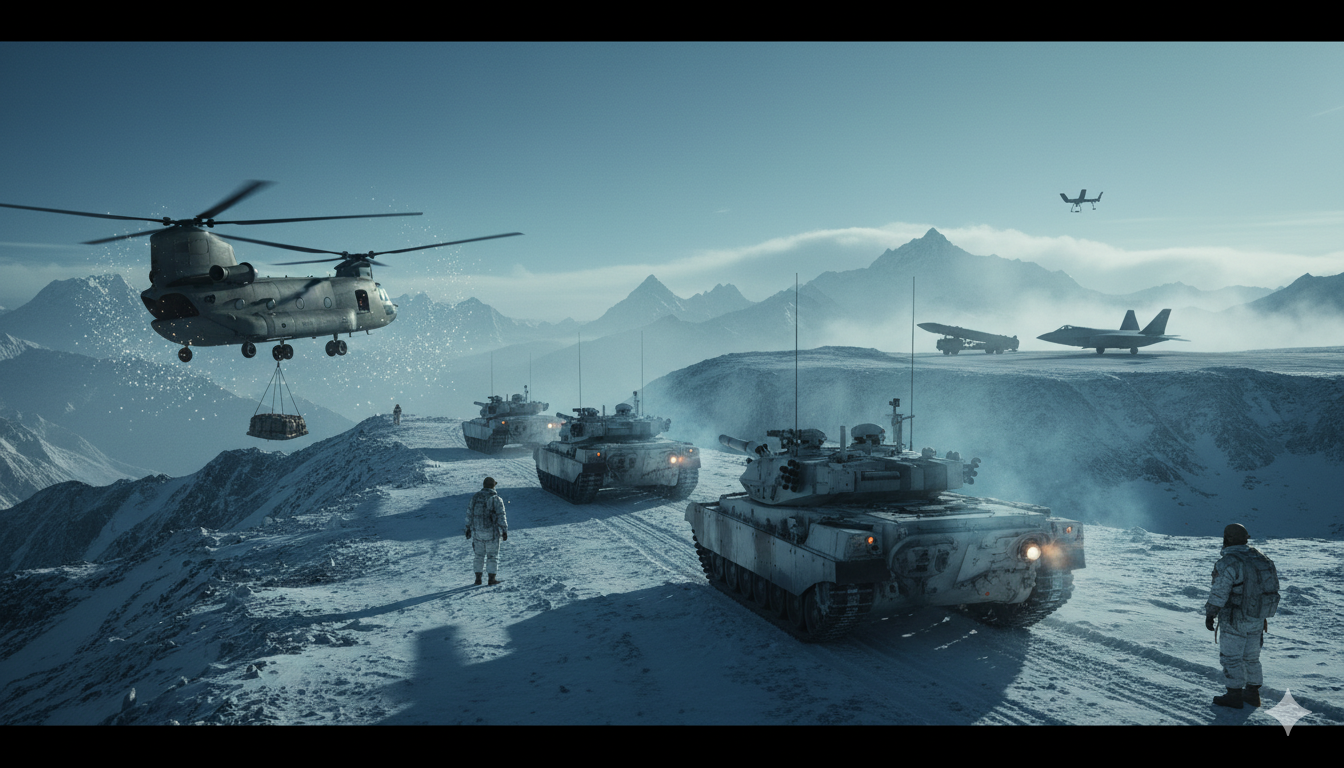
Perhaps the most daunting challenge in high-altitude warfare is logistics. These regions are often characterized by treacherous, narrow mountain passes, snow-covered valleys, and a near-total lack of infrastructure. Supplying troops with food, ammunition, fuel, and medical aid becomes a herculean task, often reliant on air drops, mules, or specialized transport helicopters. Any delay or disruption can leave soldiers isolated and vulnerable. The rugged terrain also limits the mobility of armored vehicles and makes rapid reinforcement or evacuation nearly impossible in the event of conflict escalation.

Despite these difficulties, control over high-altitude terrain offers a powerful strategic advantage. Elevated positions provide superior visibility and defensive strength, making them ideal for surveillance, early warning systems, and artillery deployment. In an era of intensifying border disputes and climate-driven access to new mountainous frontiers, mastering high-altitude warfare is no longer optional—it is a geopolitical necessity for any military seeking to secure its territorial sovereignty and deter potential adversaries.

Technological Innovations in High-Altitude Warfare

As the strategic importance of high-altitude regions intensifies, modern militaries are rapidly developing specialized technologies to overcome the operational barriers posed by these extreme environments. Among the most pressing physiological concerns is hypoxia, caused by the reduced oxygen levels at high elevations. To mitigate its debilitating effects on troops, armed forces are now deploying portable oxygen concentrators, altitude acclimatization chambers, and even blood-oxygen-enhancing drugs. These biomedical innovations are enabling soldiers to function longer and more effectively in altitudes that would otherwise impair cognitive and physical performance.

Aerial capabilities have also seen a paradigm shift. Traditional fixed-wing aircraft and helicopters struggle in thin air due to reduced lift and engine performance. To fill this gap, nations like India and China are fielding a new generation of high-altitude drones. India’s SWITCH UAV, for example, can operate effectively at elevations above 18,000 feet, offering real-time reconnaissance and surveillance in areas inaccessible to manned platforms. Similarly, China’s Wing Loong-2 provides persistent coverage across rugged border zones. These drones are now essential for tasks ranging from enemy tracking to logistical support, dramatically expanding situational awareness in the mountains.

Ground forces, too, are benefiting from advances in mobility technology. One such breakthrough is the development of cold-weather exoskeletons—powered wearable systems that allow soldiers to carry heavy loads while conserving energy and maintaining balance on steep, snow-laden terrain. These suits compensate for oxygen-deprived environments by reducing the metabolic cost of movement, a critical factor in extended mountain operations. As a force multiplier, they not only improve endurance but also minimize the risk of injury and exhaustion during missions that require prolonged physical exertion.

Intelligence, surveillance, and reconnaissance (ISR) in mountainous regions are being revolutionized through AI-driven satellite imaging and terrain mapping tools. Real-time data collected via satellite constellations and unmanned systems is now processed using machine learning algorithms to identify potential ambush zones, safe routes, and weather threats. These digital command-and-control enhancements allow for faster, data-backed decisions, even in communication-challenged environments. The combination of AI, ISR, and satellite technology creates a comprehensive, layered battlefield view in some of the most remote and inaccessible combat zones on Earth.

Artillery and munitions are also undergoing critical redesigns to suit high-altitude deployment. Conventional systems are often too heavy or sensitive to function effectively in mountainous terrain. In response, militaries are fielding ultra-lightweight howitzers, such as the M777, which can be airlifted by helicopters and rapidly deployed across difficult terrain. These weapons are paired with precision-guided munitions designed to account for the altered aerodynamics in thin air, ensuring accuracy even under extreme conditions. Such firepower provides crucial tactical support to frontline troops operating on narrow ridgelines and in deep valleys.

In sum, high-altitude warfare is catalyzing a new era of military innovation—one that fuses biomedical advances, autonomous systems, wearable technology, smart weaponry, and AI-enhanced decision-making. These breakthroughs are not just responses to environmental hardship; they are reshaping how militaries conceptualize and execute combat in vertical battlefields. The armed forces that succeed in integrating these technologies will gain a decisive edge—not just in elevation, but in capability, resilience, and global influence.

Key Players and Their Advancements

India: Veterans of the Highest Battlefield

India stands at the forefront of high-altitude military readiness, maintaining the largest force dedicated to mountain warfare. Its enduring deployment on the Siachen Glacier, the world’s highest active battlefield at an elevation of 20,000 feet, has honed its expertise over decades. In recent years, India has enhanced its capabilities with new arctic-weather gear designed to provide better thermal insulation while reducing soldier fatigue. The induction of CH-47F Chinook helicopters, modified for high-altitude operations, has improved troop and equipment mobility in remote sectors.

Additionally, India has deployed Heron MK-II UAVs for persistent surveillance along its contested border with China. The formation of a 90,000-strong Mountain Strike Corps specifically tailored for Himalayan operations further underscores the strategic importance of these regions in India’s military doctrine.

China: Strategic Build-Up Across the Tibetan Plateau

China’s high-altitude strategy hinges on infrastructure-led militarization. Over the past decade, the Chinese military has built an extensive network of all-weather roads and high-speed rail lines across Tibet and Xinjiang, facilitating rapid troop deployments near the Indian border. The establishment of high-altitude airbases such as Ngari Gunsa and Hotan has enabled the Chinese Air Force to station advanced fighter aircraft in close proximity to contested zones.

Technologically, China has taken bold steps with the deployment of hypersonic DF-17 missiles specifically adapted for mountainous regions, as well as advanced AI-powered surveillance systems capable of real-time border monitoring. These moves indicate a long-term plan to assert dominance not just through troops but through integrated, intelligent military infrastructure.

United States: Arctic and Alpine Warfare Expertise

The U.S. military has channeled its expertise into cold-weather and mountainous operations, primarily focusing on Arctic readiness. The 10th Mountain Division, a specialized unit trained in alpine combat, exemplifies America’s commitment to developing high-altitude operational capabilities. Complementing this human element is a growing reliance on high-altitude drones such as the RQ-4 Global Hawk, which offer long-range reconnaissance in thin-air environments where manned aircraft face limitations.

Technological advancements include the development of powered exoskeletons, designed to reduce soldier fatigue and increase load-carrying efficiency in oxygen-scarce environments. Coupled with satellite-based monitoring systems, the U.S. military is building a layered surveillance and response architecture tailored for remote, high-elevation battlefields.

Russia: Cold-Weather Combat Prowess

Russia’s decades-long experience in Arctic warfare provides it with a unique advantage in high-altitude and cold-weather operations. Its Arctic brigades, equipped with snowmobiles and hovercraft, are trained for rapid deployment across frozen terrains. The use of MiG-31BM interceptors, capable of high-speed engagements at high altitudes, reinforces Russia’s strategic flexibility.

In addition, Russia’s formidable icebreaker fleets secure the Northern Sea Route, allowing logistical and combat mobility through Arctic waters, which may become more contested as ice levels recede due to climate change. These capabilities highlight Russia’s integrated approach to leveraging both sea and land for cold-weather dominance.

Pakistan and Other Players

Pakistan’s Special Services Group (SSG) has developed expertise in high-altitude warfare, particularly in the challenging terrains near Siachen. Though operating on a smaller scale, Nepal’s Gurkhas bring unmatched mountain warfare capabilities, often serving in elite roles within UN peacekeeping missions. Their high-altitude acclimatization and combat readiness make them valuable assets in any terrain-based engagement.

The Future of High-Altitude Warfare

The future of high-altitude warfare is set to be defined by autonomy, digitization, and space-based capabilities. As technology evolves, militaries are increasingly relying on unmanned ground vehicles (UGVs) to navigate treacherous mountain paths, delivering supplies, evacuating casualties, and even carrying out reconnaissance without endangering human personnel. These autonomous systems are being designed to operate reliably in snow, ice, and thin air, addressing the harsh terrain where traditional logistics falter. Simultaneously, directed-energy weapons—such as high-energy lasers and microwave systems—are gaining traction due to their enhanced performance in the clear, dry, and low-turbulence air found at high elevations. Their speed-of-light engagement, lack of recoil, and cost-effectiveness make them an ideal solution for neutralizing aerial threats in real-time.

Innovation in adaptive camouflage and wearable systems is also reshaping the soldier’s toolkit. Militaries are investing in AI-integrated combat uniforms capable of adjusting their coloration and thermal signature based on surrounding terrain and weather conditions. These next-gen materials not only enhance concealment but also support temperature regulation in extreme cold. As environmental conditions change rapidly in mountainous regions—from sunlit slopes to snow-covered ridges—such smart textiles can significantly improve survivability and tactical advantage. Additionally, exoskeleton-assisted mobility and augmented reality (AR) helmets may soon offer troops real-time navigation, biometric monitoring, and target tracking—all hands-free and heads-up.

Perhaps the most game-changing development lies beyond Earth’s surface. The emergence of space-based hypersonic platforms and orbital strike capabilities is poised to redefine strategic deterrence in high-altitude regions. Satellites and hypersonic glide vehicles could enable near-instantaneous strikes or surveillance over contested mountain zones, bypassing traditional defenses and terrain barriers altogether. As climate change exposes previously inaccessible highland corridors and mineral-rich territories, the strategic value of dominating the high ground—both terrestrial and orbital—will only grow. What was once a specialized form of warfare is rapidly becoming a global priority, reshaping military doctrines and defense investments for decades to come.

Conclusion: The Next Cold War is Literally Cold

High-altitude warfare has shifted from being a specialist’s arena to a global competition ground where geopolitical interests intersect with technological innovation. With India and China entrenched in Himalayan confrontations, the U.S. and Russia fortifying their Arctic strategies, and new weapons systems being tailored for extreme environments, the race to command the high ground is intensifying.

Success in this domain will not be determined by brute strength alone. It will require a synergistic blend of human resilience, high-tech innovation, and robust infrastructure. The nation that best adapts to the harshest environments on Earth may very well shape the geopolitical contours of the future.


About Rajesh Uppal

Check Also

China’s Rare Earths and Critical Minerals Stranglehold: How Beijing Controls the Future of Global Energy Geopolitics

  Introduction: The New Frontline of Global Power In the 21st century, wars may not …

wpChatIcon
wpChatIcon