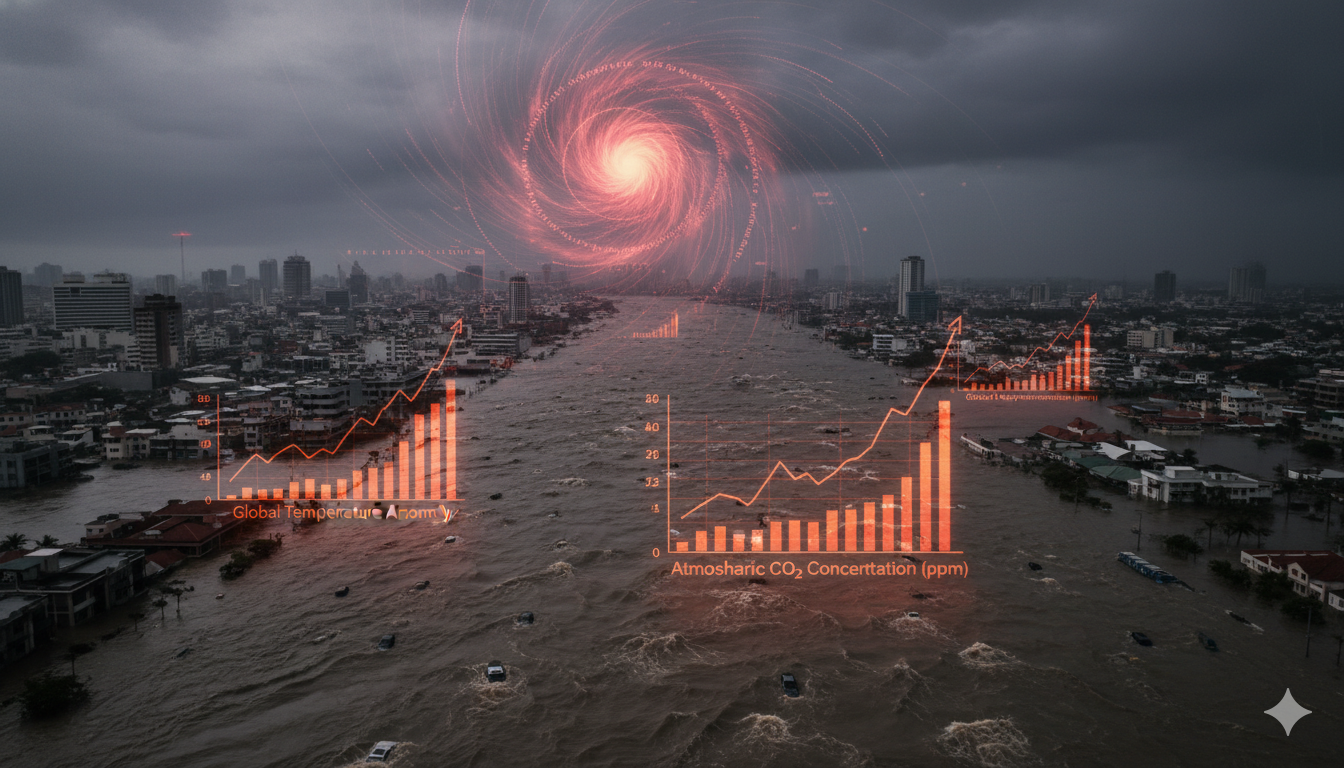
As climate change accelerates, flooding has become one of the most visible and destructive consequences of our warming world. From the streets of Dubai to the valleys of Germany and the coastlines of Brazil, heavy rains and rising waters are now more frequent, more intense, and more devastating. Scientists warn that even a modest rise in global temperatures has significant implications for the hydrological cycle. A 1.5°C increase could make heavy rainfall events 1.5 times more frequent and up to 10% wetter. At 2°C, the frequency could rise to 1.7 times per decade, with precipitation intensity increasing by 14%. This is not a distant future scenario—it’s already unfolding globally.
Escalating Global Flood Disasters: Climate Change, Infrastructure Gaps, and Mounting Economic Losses
The Global Water Partnership (GWP) has raised urgent alarms about the escalating frequency and intensity of extreme weather events, a trend worsened by climate change and insufficient water management systems. Over the past year, the world has seen devastating flood disasters: in Europe, unprecedented rainfall displaced thousands in Germany, Belgium, and Slovenia, destroying homes and vital infrastructure. In North America, both the United States and Canada have been hit by record-breaking rain events — from Vermont’s summer floods to British Columbia’s torrential downpours — overwhelming stormwater systems and causing billions in damages. Southeast Asia, including the Philippines, Thailand, and Indonesia, has also endured relentless monsoon floods, disrupting agriculture, displacing millions, and compounding existing economic vulnerabilities. According to recent estimates, flood-related economic losses in just the last eight months have already exceeded $100 billion globally.
India, too, has faced a particularly challenging year. In Himachal Pradesh and Uttarakhand, cloudbursts and glacial lake outburst floods (GLOFs) have caused widespread destruction, washing away bridges, roads, and entire villages. In Assam and Bihar, persistent river flooding has affected millions, damaging crops and forcing mass evacuations. Similar patterns have emerged in other parts of Asia and Africa, where inadequate drainage, rapid urbanization, and deforestation have intensified disaster impacts. Kenya and Somalia, for instance, have seen deadly flash floods following prolonged droughts — a dangerous climate whiplash effect that underscores the volatility of current weather patterns. These events reveal a common thread: while extreme rainfall is increasing in intensity, many countries’ infrastructure and governance systems remain underprepared, leaving populations and economies dangerously exposed.
The Science Behind Climate-Driven Flooding
One of the core drivers of this trend is the increasing capacity of warmer air to hold moisture. For every 1°C rise in temperature, the atmosphere can retain about 7% more water vapor. This leads to more intense downpours when moisture-laden systems release rain. In 2021, Western Europe saw devastating floods—particularly in Germany and Belgium—where rainfall was amplified by a warming atmosphere. In the Arabian Peninsula, the UAE and Oman experienced record-breaking rainfall in 2023, a region where such deluges were once rare.
In mountainous regions like the Alps and the Rockies, another worrying trend is unfolding: snowfall is increasingly being replaced by rain due to higher temperatures. This shift causes rapid snowmelt and water runoff, increasing the likelihood of flash floods and landslides. Meanwhile, rising sea levels—driven by melting glaciers and thermal expansion—are amplifying coastal flooding, particularly in low-lying cities such as Miami, Jakarta, and Lagos.
Compounding Factors: Beyond Climate Change
While global warming is the principal amplifier, other anthropogenic factors compound flood risks. Unchecked deforestation in upper catchments reduces the land’s natural ability to retain water, leading to faster runoff and sedimentation in rivers. The Sundarbans, for instance, have seen severe flooding in part due to mangrove degradation.
Urban sprawl into floodplains has significantly reduced natural buffer zones. In cities like Dhaka and Manila, rampant construction on former wetlands and floodplains has obstructed drainage and increased urban flood exposure. Inadequate infrastructure—clogged drains, under-designed culverts, and aging embankments—further exacerbate waterlogging and inundation. In Bihar, India, seasonal floods regularly breach weak embankments, displacing millions.
Flooding’s Disproportionate Impact on Vulnerable Communities
Floods do not affect all populations equally. Low-income communities, especially in the Global South, bear the brunt of repeated flooding events. Informal settlements near riverbanks or coastlines often lack flood defenses and are excluded from official early warning systems. In countries like India, Nigeria, and the Philippines, millions are displaced every year, triggering secondary crises in food security, health, and education. Flooding also impacts agriculture—washing away topsoil, destroying crops, and disrupting supply chains—posing serious risks to food systems globally.
Climate Change and the Military: The Rising Challenge of Flooding
Flooding, as a direct consequence of climate change, presents a growing set of challenges for military forces worldwide. As extreme rainfall events become more frequent and intense, military infrastructure — often located near coastlines, riverbanks, or low-lying training grounds — faces an increased risk of inundation. Bases in flood-prone regions are vulnerable to operational shutdowns, damage to equipment, and disruption of critical supply chains. For instance, U.S. military installations along the Gulf of Mexico and Asia-Pacific naval bases have experienced repeated flood damage, resulting in costly repairs and diminished readiness. In countries like Bangladesh and Indonesia, where climate-induced floods are recurrent, military units are often diverted from core security functions to lead large-scale disaster relief and evacuation operations.
These mounting humanitarian responsibilities can dilute combat readiness and strain resources. Increased military deployment for flood response also necessitates specialized training, logistics, and equipment that traditional armed forces may not possess. Amphibious transport, temporary shelters, water purification systems, and search-and-rescue capabilities are increasingly being integrated into military inventories as part of disaster response readiness. Moreover, the unpredictability of climate-induced flooding requires dynamic planning, rapid mobility, and coordination with civil agencies — a shift that alters the traditional role and structure of military forces.
In terms of strategic impact, flooding may also destabilize regions, fueling conflict over displaced populations, food shortages, and weakened governance. Militaries may find themselves not only responding to natural disasters but also dealing with security breakdowns in affected zones. National security policies must now consider how floods can trigger cascading threats — from infrastructure collapse to migration-driven tensions. Climate-proofing military installations, integrating real-time hydrological forecasting, and adopting green defense technologies are essential steps toward maintaining defense readiness in the era of climate disruption. The convergence of environmental risks and security imperatives calls for a fundamentally new model of military preparedness — one that treats climate adaptation as a core national defense priority.
A Path Forward: Mitigation and Adaptation Strategies
To tackle this growing crisis, an integrated, multi-pronged approach is essential. Several strategies have shown success at both local and global levels:
Early Warning Systems
The Global Water Partnership (GWP) stresses that addressing the mounting water-related crises requires a cohesive and data-driven strategy. At the heart of this effort lies the use of advanced analytics, real-time monitoring networks, and AI-powered predictive modelling to forecast and respond to floods, droughts, and wildfires before they escalate.
Investing in modern flood forecasting and early warning systems can save lives. Initiatives like India’s National Hydrology Project and Australia’s Murray–Darling Basin water management program illustrate how integrating technology with governance can improve early warning systems, optimise resource allocation, and save lives. In Assam, India, the Flood Early Warning System (FLEWS) has already demonstrated that predictive alerts, when paired with community-based communication channels, can drastically reduce disaster impacts. Expanding these systems to vulnerable river basins and coastal zones worldwide should be a top priority.
Nature-Based Solutions
Restoring and protecting natural ecosystems—such as mangroves, wetlands, and forests—offers a highly cost-effective and sustainable approach to flood protection. In Vietnam’s Red River Delta, the Rehabilitation Project restored over 100,000 hectares of wetlands and mangroves, creating a natural barrier that has dramatically reduced flood risks for local communities. Beyond shielding vulnerable populations from extreme weather, these restored ecosystems also enhance biodiversity, improve water quality, and support local livelihoods, demonstrating how environmental stewardship can double as climate resilience infrastructure.
Climate-Resilient Infrastructure
Investing in infrastructure designed to withstand extreme weather is critical to safeguarding lives and economies. Bangladesh offers a compelling example through initiatives like the Coastal Embankment Improvement Project (CEIP), which has built cyclone shelters, elevated roads, and reinforced embankments to protect millions in low-lying coastal areas. Such projects not only reduce disaster-related losses but also maintain connectivity for relief and trade during emergencies. Scaling up similar investments in climate hotspots worldwide can ensure communities remain functional and secure, even in the face of increasingly severe climate events.
Community Engagement and Livelihood Resilience
Flood resilience is most effective when local communities are not just recipients of aid but active participants in preparedness and response. Initiatives like “Living with Floods” in Southeast Asia equip residents with training in early warning response, evacuation planning, and adaptive livelihood strategies, enabling them to act as first responders when disasters strike. In agricultural regions, techniques such as integrated rice–fish farming have strengthened both food security and income stability, ensuring that communities can recover more quickly and sustain their way of life despite repeated flooding.
Equally critical is broad-based participation in decision-making. GWP emphasises that successful integrated water resource management (IWRM) cannot be confined to government ministries or corporate boardrooms. Farmers, local communities, and civil society organisations must be part of the planning and implementation process. This principle is already being applied in Kerala, India, where participatory water budgeting and watershed management have been embedded into state planning, and in the Netherlands, where citizen-led flood preparedness programs complement national flood defences. In Vietnam’s Red River Delta Rehabilitation Project, the restoration of over 100,000 hectares of mangroves and wetlands has both enhanced biodiversity and provided a natural buffer against storm surges—an example of how nature-based solutions can address climate resilience and environmental sustainability simultaneously.
Urban Planning and Zoning Reform
Urban areas face intensified flood risks due to rapid development, impermeable surfaces, and outdated planning regulations. Modernizing zoning laws to restrict construction in high-risk floodplains, while promoting permeable pavements, stormwater capture systems, and green roofs, can significantly reduce flood damage. Nature-inclusive urban design—integrating wetlands, urban forests, and green corridors—acts as a living drainage system, lowering runoff volumes, cooling city microclimates, and creating healthier, more resilient urban spaces.
The GWP warns that the window for preventative action is closing fast. Climate change is intensifying the destructive potential of floods and wildfires, as seen in the recent tragedies in Greece, Canada, and Himachal Pradesh. Building resilience demands sustained investment in climate-ready infrastructure such as cyclone shelters, elevated roads, and reinforced embankments—like those constructed in Bangladesh under the Coastal Embankment Improvement Project. In urban areas, reforming zoning laws to prevent construction on flood-prone land, integrating green infrastructure, and adopting permeable surface designs can reduce runoff and lower flood risk. At the same time, livelihood resilience programs, such as Living with Floods in Southeast Asia, are empowering residents to serve as first responders while adopting adaptive agricultural practices like integrated rice–fish farming, which improves both food security and income in flood-prone zones.
Ultimately, GWP calls for cross-sector collaboration, technology-enabled planning, and sustainable land and water management to be pursued not as optional initiatives but as fundamental priorities for national security and human survival. The combination of cutting-edge forecasting, ecological restoration, resilient infrastructure, and empowered communities offers a clear roadmap. The challenge is no longer identifying what needs to be done—it is ensuring that action happens now, at scale, before the next billion-dollar disaster strikes.
Policy Blueprint: Guidelines and International Cooperation
At the policy level, national disaster management agencies must update flood response frameworks to reflect current climate realities. The National Disaster Management Authority (NDMA) of India, for instance, provides detailed guidelines on pre- and post-flood preparedness, including infrastructure elevation, floodproofing, evacuation protocols, and communication strategies.
However, no single country can address climate-induced flooding alone. Cross-border river basin management, technology transfer, and climate finance are vital. Multilateral cooperation—via platforms like the UNFCCC, Global Facility for Disaster Reduction and Recovery (GFDRR), and the Adaptation Fund—should prioritize flood resilience in their agendas.
Conclusion: A Call for Global Resilience
Flooding is no longer a seasonal nuisance—it is a chronic, escalating threat with global implications. As climate change reshapes weather patterns, nations must act decisively to adapt, invest, and cooperate. A future of recurring mega-floods is not inevitable. By learning from past disasters, restoring ecological buffers, and empowering communities with data, infrastructure, and tools, the world can transform this watery threat into an opportunity for resilience-building and sustainable development.
International Defense Security & Technology Your trusted Source for News, Research and Analysis