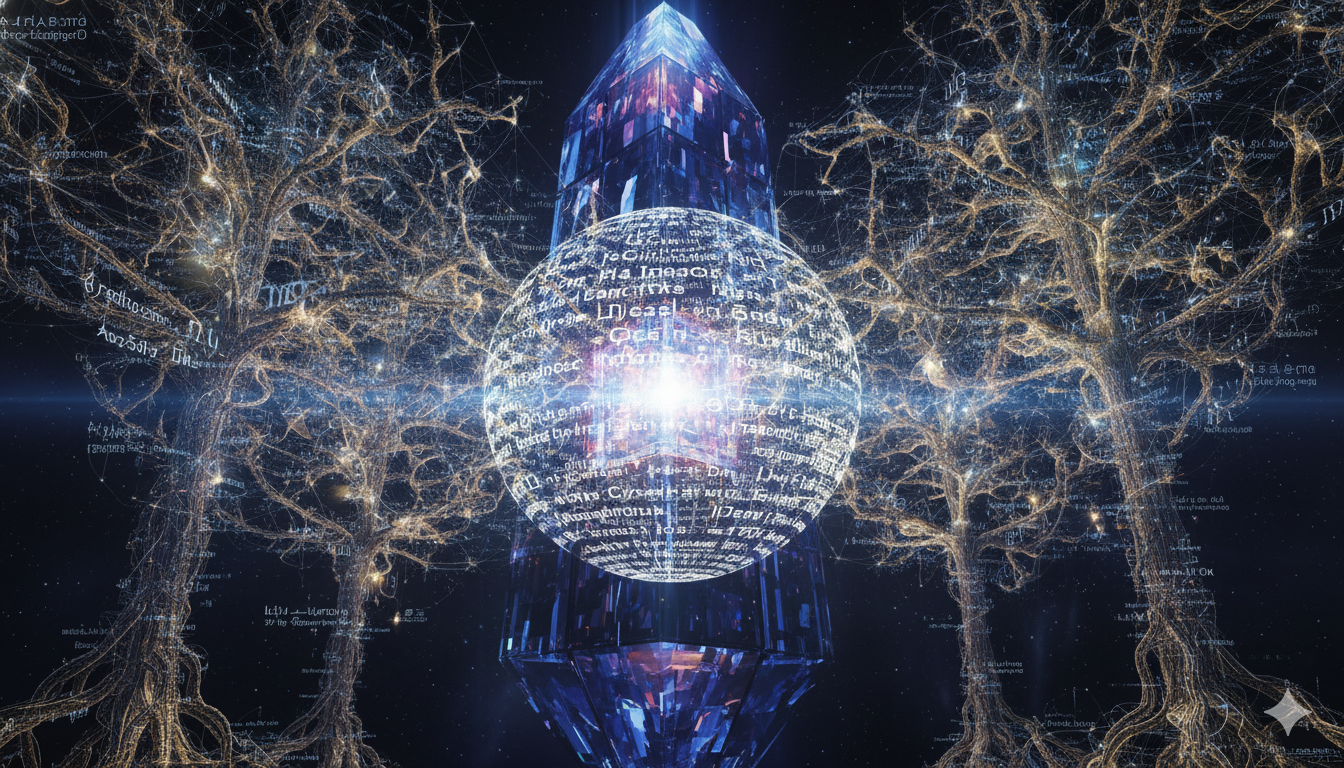
The world is witnessing two technological revolutions unfold in parallel: quantum computing and artificial intelligence. Each is transformative on its own, but together, they promise breakthroughs that could redefine what’s possible in machine learning and data science. As Large Language Models (LLMs) such as GPT-4 and Claude continue to push the boundaries of generative AI, a key question emerges: What happens when we supercharge these models with quantum power?
Enter Quantum Natural Language Processing (QNLP) and Quantum-Enhanced Generative AI (QGen-AI)—two emerging domains where the fusion of quantum computing with deep learning techniques could accelerate performance, reduce resource consumption, and unlock new capabilities that classical systems struggle to achieve.
The Energy Crisis in AI: Why Quantum Is the Missing Piece
Large Language Models (LLMs) like GPT-4 and Gemini are transforming how we work, communicate, and build knowledge. But behind the scenes, the cost of powering this transformation is climbing rapidly. Training GPT-3 consumed an estimated 1,287 megawatt-hours—equivalent to powering the average U.S. household for more than 120 years—and emitted nearly 284 tonnes of CO₂, even for a relatively modest 1.75-billion parameter model. As models balloon to hundreds of billions or even trillions of parameters, the burden on compute, energy, and sustainability becomes unsustainable.
This is where quantum computing enters the stage—not just as a faster alternative, but as a fundamentally different approach to computation. With the ability to encode and process complex relationships through entanglement and superposition, quantum-enhanced systems promise to dramatically reduce energy usage, simplify model architectures, and elevate the fidelity of natural language understanding. Projected energy reductions of up to 30,000× during training aren’t merely theoretical—they’re beginning to materialize in early-stage hybrid systems.
Table: Quantum vs. Classical LLM Efficiency
| Metric | Classical LLMs | Quantum-Enhanced LLMs |
|---|---|---|
| Energy Use (Training) | 1,287 MWh (GPT-3) | 30,000x lower (projected) 9 |
| Parameters Required | Billions | Fewer for equivalent output 1 |
| Syntax-Semantics Integration | Sequential processing | Simultaneous via entanglement 1 |
| Hallucination Rate | High (pre-trained bias) | Reduced via contextual fidelity |
Quantum Natural Language Processing (QNLP): Language at the Speed of Entanglement
Traditional NLP models—such as transformers—approximate language understanding by assembling vast matrices of word embeddings and attention weights. While these architectures have enabled impressive feats like generative text and real-time translation, they often fall short in mimicking the fluid and context-sensitive way humans process language. Language is inherently compositional, ambiguous, and deeply contextual—traits that classical models struggle to capture with purely statistical mechanisms. This mismatch often leads to hallucinations, where models generate fluent but factually incorrect outputs, and brittleness when inputs deviate from the training distribution.
Quantum Natural Language Processing (QNLP) offers a transformative alternative by using the principles of quantum mechanics to model linguistic phenomena. Instead of representing words as static points in vector space, QNLP encodes them as quantum states within Hilbert spaces, allowing for a richer, more nuanced expression of relationships. Through quantum entanglement, QNLP can link grammatical components—such as subject, verb, and object—into a single, unified quantum circuit. This creates a fundamentally new paradigm for natural language understanding: one where syntax and semantics are processed simultaneously, rather than sequentially. The result is a model architecture that aligns more closely with how meaning arises in human language.
These theoretical breakthroughs are already producing real-world results. Quantinuum’s work on QNLP, particularly with quantum tensor networks, has demonstrated superior classification accuracy on natural language tasks using just four qubits on its H1 quantum hardware. Such results suggest that quantum models could outperform classical counterparts not by scaling up, but by leveraging mathematically elegant encodings that require fewer parameters to achieve comparable—or even superior—understanding. These models also show potential for better generalization, especially in low-data environments or languages with complex grammatical structures.
As Dr. Bob Coecke, Quantinuum’s Chief Scientist and a pioneer in the field, aptly puts it: “Language seems to want to live on quantum. Simulating it classically is technologically expensive.” His insight points to a future where natural language processing becomes not only more powerful but more efficient—redefining how we build AI systems capable of engaging with human nuance at a deeper level.
Quantum-Enhanced Generative AI (QGen-AI): Tackling Training Complexity
The training of LLMs like GPT-4 or Gemini demands billions of compute hours, extensive energy consumption, and specialized infrastructure. QGen-AI offers a potential solution by introducing quantum subroutines into generative model training and inference.
Quantum machine learning algorithms, such as the Variational Quantum Classifier (VQC) and Quantum Generative Adversarial Networks (QGANs), are being explored to accelerate components of model training that are classically expensive—like optimizing loss landscapes or sampling high-dimensional distributions. Quantum-enhanced gradient descent, for instance, could converge faster on optimal weights, particularly in multimodal learning environments.
Moreover, quantum annealing—used by companies like D-Wave—can assist in optimizing LLM hyperparameters, potentially reducing the overhead of grid and random search techniques. As quantum processors scale past 1,000 qubits, their role in hybrid training pipelines could transition from experimental to indispensable.
Quantum Generative AI (QGen-AI): Redefining Model Design and Forecasting
Quantum Generative AI (QGen-AI) is ushering in a fundamental shift in how we design, train, and deploy language models. Large Language Models (LLMs) have proven immensely powerful, but their computational demands are extreme—consuming vast energy resources and requiring enormous datasets. QGen-AI introduces a hybrid paradigm that blends quantum algorithms with classical deep learning techniques to optimize performance and efficiency. One standout innovation is the Quantum Recurrent Neural Network (QRNN), which can handle tasks like sentiment analysis and sequence modeling using significantly fewer parameters than their classical counterparts. Early experiments show that these quantum circuits, trained in hybrid pipelines, retain semantic depth while operating on drastically reduced computational overhead.
Building on this momentum, Quixer Transformers—a class of quantum-enhanced transformer models—are tailored to the strengths of near-term quantum hardware. These architectures leverage quantum entanglement and interference to process language more efficiently, offering up to 60% faster inference times while consuming fewer resources. Unlike traditional transformers, which grow in complexity with input length, Quixer architectures can harness quantum parallelism to encode and process entire sequences simultaneously. This makes them particularly well-suited for applications that require high-throughput processing, such as conversational AI, autonomous decision-making, and real-time recommendation engines.
A particularly promising domain for QGen-AI is time-series forecasting, an area where even advanced LLMs often falter. Traditional models struggle with dynamic, nonstationary datasets—common in fields like finance, logistics, supply chain management, and environmental science. Quantum generative models, however, can outperform these models by leveraging quantum Fourier transforms, amplitude estimation, and phase encoding to capture complex periodicities and temporal dependencies. A recent study by Japanese researchers demonstrated that quantum models could achieve 89% accuracy in imputing missing financial data while using 40% fewer parameters than classical autoregressive models. These capabilities make QGen-AI a natural choice for applications requiring both robustness and speed, particularly when data is incomplete, noisy, or irregular.
The commercial implications of QGen-AI are already becoming evident. Quantinuum’s Gen QAI framework, built on the H2 quantum processor, is being used in pharmaceutical research to simulate molecular behavior at the quantum level. These simulations accelerate the early-stage drug discovery process by identifying viable compounds with higher precision and lower cost. In parallel, a joint project between Quantinuum and Hewlett Packard Enterprise (HPE) is revolutionizing battery R&D in the automotive sector. By using quantum-enhanced materials modeling, the partnership has been able to shave over six months off the design cycle for next-generation lithium-ion batteries—reducing time-to-market and improving material efficiency.
QGen-AI is not just about accelerating computations—it represents a reimagining of how intelligence can be architected, trained, and scaled. By integrating quantum-native principles into model design, developers are moving beyond brute-force scaling and towards algorithmic elegance and energy efficiency. As quantum hardware continues to evolve, the reach of QGen-AI will expand—making it a cornerstone of intelligent systems that are not just smarter, but faster, leaner, and far more adaptive to the real-world environments they must navigate.
Quantum Time-Series Forecasting: Enhancing Predictive Abilities of AI
Beyond language, quantum computing is poised to revolutionize another cornerstone of AI: time-series forecasting. Financial markets, supply chains, weather patterns, and user behavior all rely on this form of predictive modeling. Quantum algorithms like Quantum Fourier Transforms (QFT) and Quantum Phase Estimation can process periodic signals and temporal correlations more efficiently than classical counterparts.
Integrating quantum time-series forecasting with LLMs opens new frontiers—such as real-time predictive text engines that adapt not just to linguistic patterns, but to time-sensitive trends and sequences in user inputs, market data, or environmental variables. These hybrid AI systems could be especially useful in dynamic domains like finance, logistics, and defense.
The Hybrid Era: Navigating NISQ Toward Fault-Tolerant Systems
The quantum computing landscape of 2025 is firmly grounded in the NISQ (Noisy Intermediate-Scale Quantum) era—where quantum systems with tens to hundreds of qubits are powerful but imperfect. While fully fault-tolerant quantum computers remain years away, hybrid quantum-classical approaches are bridging the gap, combining the brute-force capabilities of classical systems with the unique advantages of quantum computation. In these architectures, classical hardware handles large-scale data ingestion and preprocessing, while quantum circuits are used for highly specialized tasks such as optimization, semantic embedding, entangled data compression, and probabilistic pattern recognition.
Several key innovations are making this transition feasible and practical. AI-based quantum calibration tools, such as those pioneered by IQM, are automating low-level hardware tuning, reducing qubit error rates and operational overhead by up to 30%. These systems leverage deep learning to predict optimal gate sequences, dynamically calibrating qubits for more stable performance. At the algorithmic level, Quantum Error Mitigation (QEM) is emerging as a critical strategy for near-term quantum systems. Transformer-based models are being deployed to predict and correct quantum noise signatures in real-time, effectively halving the error rates that once limited algorithmic depth and circuit execution length. Additionally, IBM’s Qiskit Code Assistant is democratizing access to quantum programming. This tool converts natural-language descriptions into Qiskit code, empowering researchers and engineers without quantum expertise to begin prototyping quantum-accelerated workflows.
These hybrid advancements are already delivering commercial impact across multiple sectors. In pharmaceuticals, companies like Quantinuum and Amgen are employing QNLP frameworks to classify peptide-protein interactions—speeding up early-phase drug discovery. In financial services, Al Rabban Capital is deploying quantum-enhanced Monte Carlo simulations to optimize multi-asset portfolios under uncertain market conditions. Meanwhile, in the energy sector, quantum chemistry simulations are driving a new wave of materials innovation, allowing companies like Hewlett Packard Enterprise to identify next-generation battery compounds with far greater precision than classical DFT (Density Functional Theory) methods alone. Together, these applications highlight a defining truth of 2025: we don’t need full-scale quantum computers to unlock transformative value—we just need intelligent hybrid systems that know how to split the workload.
Table: Quantum AI’s Near-Term Commercial Impact
| Sector | Application | Partnership |
|---|---|---|
| Pharma | Peptide classification for drug design | Quantinuum-Amgen 9 |
| Finance | Portfolio optimization | Al Rabban Capital (Qatar) 4 |
| Energy | Battery material discovery | Quantinuum-HPE |
The Road Ahead: Ethical, Technical, and Social Frontiers
Despite its immense promise, quantum AI still faces substantial technical challenges. One of the most pressing is the issue of barren plateaus—a phenomenon where quantum neural networks get stuck in vast flat regions of the optimization landscape, making it nearly impossible for gradient-based methods to update parameters effectively. These dead zones severely limit training scalability and model accuracy. However, recent progress in quantum-aware initialization strategies, such as structured circuit templates and domain-informed priors, shows promise in mitigating these optimization pitfalls and enabling more stable learning across qubit architectures.
Another fundamental constraint is the absence of practical quantum random access memory (qRAM). Unlike classical systems that can store and retrieve massive datasets on demand, current quantum computers lack a scalable and efficient memory subsystem. This bottleneck restricts the types of data-intensive tasks that can be performed on quantum hardware—especially those involving large-scale LLM training or real-time inference. Although qRAM remains largely theoretical, hybrid memory architectures and clever classical-quantum preprocessing may offer interim solutions as the technology matures.
Socioeconomic Shifts: Building an Inclusive Quantum Future
As quantum technologies gain traction, the global AI ecosystem must contend with significant socioeconomic shifts. The talent gap is among the most pressing. Developing, operating, and scaling quantum-AI systems requires a rare blend of quantum physics, computer science, and machine learning expertise. To address this, countries like Qatar are making strategic investments—its Invest initiative aims to train over 500 students in quantum-AI integration, creating a skilled workforce capable of driving innovation in the Middle East and beyond.
At the same time, there’s a growing risk of a “quantum divide”—where only a few tech giants and well-funded institutions can afford access to cutting-edge quantum resources. While hybrid cloud platforms (such as IBM Quantum and Amazon Braket) are helping democratize access, cost barriers remain high, often placing small labs and startups at a disadvantage. Ensuring equitable access to quantum computing is critical—not just for fairness, but for maximizing global innovation potential. Policies around open-source tooling, collaborative research, and subsidized cloud credits will play a key role in shaping a more inclusive quantum-AI future.
Conclusion: Building a Quantum-Literate AI Future
The convergence of quantum computing and large language models is no longer a speculative frontier—it is an active transformation reshaping how we understand, build, and deploy intelligent systems. With innovations in Quantum Natural Language Processing (QNLP), quantum generative AI, and hybrid time-series forecasting, we’re moving toward AI models that not only run faster, but also think with greater precision, reason with contextual depth, and adapt to change with quantum fluidity. This evolution marks a shift from performance-focused scaling to architecture-level intelligence—where entanglement, superposition, and quantum logic power new cognitive capabilities.
Looking toward 2030, we envision a landscape where LLMs don’t just process language—they understand it structurally and semantically. These models will avoid hallucinations, predict real-world events in near real-time, and operate with drastically lower energy footprints—up to 90% more efficient than today’s architectures. In sectors like finance, energy, healthcare, and logistics, such advancements could fundamentally reshape decision-making and automation. As SAP’s Rajprasath Subramanian emphasized, “Businesses adopting hybrid quantum-classical AI now will dominate the next decade’s computational landscape.” That isn’t just a forecast—it’s a strategic imperative.
In this new era, quantum literacy becomes the foundation for AI maturity. Organizations, researchers, and developers must begin integrating quantum principles into their workflows, from model design to hardware orchestration. The future of AI isn’t just bigger models and better chips—it’s a co-evolution of quantum algorithms, AI architectures, and ethical frameworks that together define a more powerful, transparent, and responsible intelligence paradigm.
International Defense Security & Technology Your trusted Source for News, Research and Analysis