Cyber Threats and Security Trends in 2025: Navigating the Evolving Digital Battlefield

Introduction: The Escalating Cyber Arms Race

As we move deeper into 2025, cyber threats have reached unprecedented levels of sophistication and global impact. The cost of cybercrime is projected to exceed $10.5 trillion annually, driven by AI-powered attacks, vulnerabilities exposed by quantum computing, and increasingly well-organized cybercriminal ecosystems. This year alone, the world has witnessed a 72% surge in state-sponsored cyber operations, ransomware payments averaging $2.3 million per incident, and reports that 83% of organizations have already experienced at least one AI-driven attack.

In response, the cybersecurity market is expanding at a historic pace, with global spending expected to reach $420 billion. Enterprises are racing to deploy next-generation defenses in an environment where cyber conflict has become as strategic as traditional warfare.

2025’s Most Dangerous Cyber Threats

Cyber threats have become an increasingly important issue for businesses and individuals alike. As technology continues to evolve and become more integrated into our daily lives, cyber criminals are finding new and innovative ways to exploit vulnerabilities in the digital world.

As enterprises increasingly migrate to the cloud for cost-effectiveness and scalability, cloud security has emerged as a critical priority, with the segment projected to experience the fastest growth in coming years. While providers like Google and Microsoft offer strong native protections, risks persist due to misconfigurations, phishing, malware, and insider negligence, making organizations vulnerable to breaches and data theft.

The increasing number of cyber-attacks with the emergence of e-commerce platforms, deployment of cloud solutions, and proliferation of smart devices are some factors driving the market growth. Cyber threats are anticipated to evolve with the increase in usage of devices with intelligent and IoT technologies.

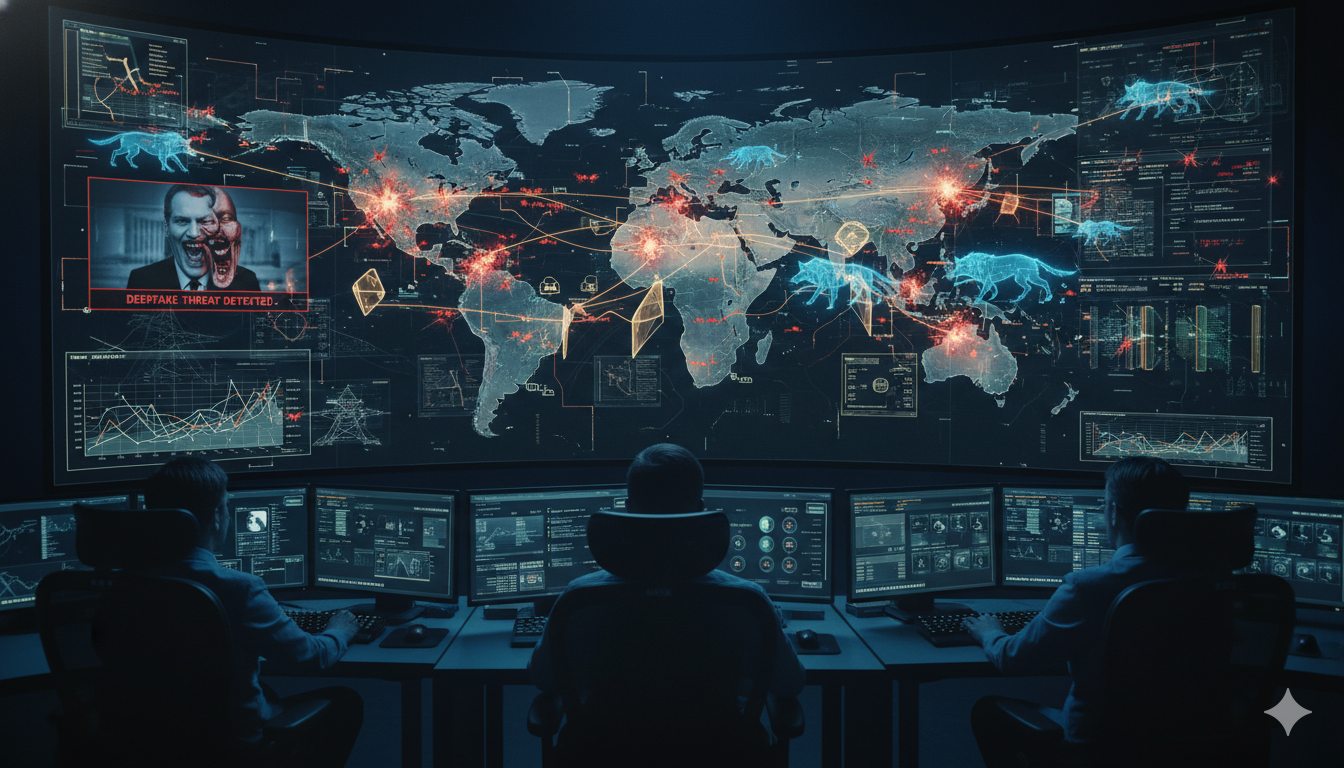
The cyber battlefield of 2025 is marked by unprecedented speed and scale, driven by AI-powered automation and hyper-connected infrastructures. Attackers are no longer confined to traditional exploits; instead, they are leveraging emerging technologies to launch stealthier, more disruptive, and harder-to-detect campaigns. Understanding these evolving threats is critical for organizations preparing to defend against tomorrow’s adversaries.

AI-Enabled Cyber Warfare

Cyber-attacks are becoming more sophisticated and damaging, with adversaries leveraging new generations of malware that are increasingly difficult to detect using conventional security methods. In 2025, artificial intelligence (AI) has become a cornerstone of both cybersecurity defense and cyber offense.

AI can rapidly analyze vast datasets, identify anomalies, and detect potential intrusions that might otherwise go unnoticed. Machine learning (ML) algorithms can adapt in real time, learning from new attack vectors and automating responses to breaches. Adaptive ML models are evolving to create near-autonomous defense systems capable of spotting and neutralizing threats faster than human operators.

One of the most alarming trends in 2025 is the rapid escalation of AI-enabled cyber warfare. Unlike traditional attacks that required careful planning and manual execution, autonomous AI-driven systems now spread across networks at machine speed, replicating themselves and exploiting vulnerabilities far faster than human defenders can react. Deepfake-driven social engineering has emerged as a particularly dangerous tool, responsible for nearly 40% of initial breaches as attackers use hyper-realistic audio and video to impersonate executives, manipulate employees, and bypass traditional safeguards.

However, AI is equally becoming a weapon for attackers. Threat actors now use AI to mimic trusted behaviors, automate large-scale phishing campaigns, identify vulnerabilities faster than human hackers, and launch AI-enabled malware capable of self-adapting to evade detection. AI-driven bots can exploit weaknesses in networks, identify misconfigured firewalls, and develop precision attacks tailored to specific users or organizations.

Equally concerning is the rise of AI-powered vulnerability scanners. These tools can analyze massive amounts of code and infrastructure within seconds, identifying zero-day flaws hundreds of times faster than human security researchers. As a result, organizations are no longer dealing with months or weeks to patch vulnerabilities—they often have just hours before exploitation. This machine-speed battlefield fundamentally changes the nature of cybersecurity, forcing defenders to adopt AI-driven defense systems simply to keep pace.

The dual nature of AI poses one of the greatest cybersecurity challenges in 2025. On one hand, AI-powered defenses are critical to securing digital ecosystems. On the other, AI-enabled attacks are driving an era of “AI vs. AI” cyber warfare. Advanced persistent threat (APT) groups and nation-states are already experimenting with AI-based cyber weapons—intelligent viruses capable of infiltrating enemy networks and disrupting critical infrastructure.

As smart cities, autonomous systems, and military platforms increasingly integrate AI, the risk of AI-driven cyber warfare escalates. Distributed denial-of-service (DDoS) attacks, powered by AI coordination, can bypass traditional defenses and cause mass disruption. The race is now underway between defenders building autonomous cyber defense systems and adversaries engineering AI-based offensive cyber weapons, setting the stage for one of the most dangerous technological battles of the decade.

Quantum Cryptography Breaches

The once-theoretical threat of quantum cryptography breaches is now becoming a reality. In 2025, the first successful “harvest-now, decrypt-later” (HNDL) attacks have been reported, confirming long-standing fears that encrypted data harvested years earlier is now being decrypted with quantum processing power. Sensitive information once thought secure is being exposed, from state secrets to financial records, underscoring the urgency of transitioning to new forms of encryption that can withstand quantum capabilities.

In response, a growing number of organizations are embracing post-quantum cryptography (PQC). Already, 37% of Fortune 500 companies have begun migrating to quantum-resistant algorithms, and governments worldwide are issuing mandates to accelerate adoption. To support this transition, NIST has released its Post-Quantum Cryptography Standard 2.0, which approves six robust algorithms designed to resist even the most advanced quantum attacks. While this is a step forward, the race between encryption and decryption technologies remains one of the defining security challenges of the decade.

Ransomware 3.0

Ransomware as a Service (RaaS) has evolved into a thriving underground economy, transforming ransomware from a technical skillset into an accessible subscription-based business model. In this arrangement, operators develop and maintain ransomware tools while affiliates—often with little technical expertise—pay for access and launch attacks against chosen targets. Modern RaaS platforms function like professional SaaS portals, offering dashboards that track infections, payments, and encrypted files, with transactions typically conducted in cryptocurrency to mask identities.

Ransomware has evolved into what experts now call “Ransomware 3.0,” representing a dramatic escalation in both sophistication and impact. Unlike earlier attacks that triggered immediately, modern ransomware lies dormant within networks for an average of 42 days before activation. This latency makes detection exponentially harder, as attackers study the environment, map sensitive assets, and prepare for maximum disruption. When finally unleashed, the damage is far-reaching and meticulously calculated.

Moreover, today’s ransomware gangs employ “quadruple extortion” tactics. Beyond simply encrypting data, they combine theft of sensitive information, DDoS assaults, reputational blackmail, and even physical threats to pressure victims into paying. The rise of ransomware-as-a-service (RaaS) has also lowered the entry barrier, with dark web subscriptions starting at just $250 per month. This commoditization ensures that ransomware will remain one of the most persistent and profitable attack vectors in the foreseeable future.

Critical National Infrastructure (CNI) Threats

Cyberattacks on Critical National Infrastructure (CNI) remain a top global concern in 2025, with several high-profile incidents underscoring the growing risks. Earlier this year, pro-Russian hackers temporarily manipulated a dam’s control system in Norway, releasing millions of gallons of water—a rare confirmed case of physical infrastructure sabotage via cyber means. At the same time, Poland reported an average of 300 cyberattack attempts per day on infrastructure like water and power systems, prompting the creation of a civilian–military cybersecurity operations center with a 99% neutralization rate. In the UK, the government reinforced its regulatory response by introducing the Cyber Security and Resilience Bill, backed by over £1 billion in funding to fortify CNI sectors such as energy, health, water, and transport. This new framework emphasizes proactive strategies—secure-by-design architecture, AI-enhanced detection, and public–private threat sharing—as foundational to national stability.

Internet of Things (IoT) Threats

By 2025, the number of connected IoT devices is projected to surpass 30 billion, dramatically increasing the potential attack surface for cybercriminals. Every sensor, smart appliance, wearable, and industrial IoT system represents a possible entry point for exploitation. Attackers are no longer just targeting consumer gadgets like smart TVs or home assistants; they are increasingly compromising industrial control systems, healthcare devices, and connected vehicles, where the consequences can extend from data theft to physical harm.

The pace of IoT adoption continues to outstrip the development of robust security frameworks. Common vulnerabilities include weak authentication, default passwords, unpatched firmware, and device misconfigurations, all of which can expose networks to infiltration. Threat actors are weaponizing these weaknesses by creating IoT botnets—armies of compromised devices used to launch massive distributed denial-of-service (DDoS) attacks or to pivot deeper into enterprise systems.

In 2025, the stakes are higher: with IoT underpinning smart cities, autonomous transport, and medical technologies, the compromise of even a handful of devices can cascade into widespread disruption. Security leaders are responding with strategies such as zero trust for IoT ecosystems, AI-driven anomaly detection, stricter supply chain vetting, and mandatory over-the-air patching, but adversaries are evolving just as quickly.

The Supply Chain Apocalypse

Perhaps the most insidious trend of 2025 has been what experts call the “supply chain apocalypse.” Software supply chain attacks have surged more than 200% since 2023, with attackers exploiting vulnerabilities in open-source dependencies and development pipelines. A particularly troubling technique, known as dependency confusion, tricks developers into downloading malicious packages disguised as legitimate updates. Because these attacks exploit trusted software distribution channels, they often bypass traditional perimeter defenses undetected.

On the hardware front, the situation is equally alarming. Recent studies revealed hidden backdoors in 12% of IoT devices tested this year, raising profound concerns about the integrity of global manufacturing and sourcing practices. As organizations increasingly depend on interconnected devices and third-party code, the attack surface expands exponentially. Addressing this threat requires not only technical defenses but also a rethinking of procurement practices, vendor risk management, and international standards for supply chain security.

Sector-Specific Threat Landscape

As cyber threats evolve, their impact is no longer uniform across industries. Each sector faces its own tailored risks, shaped by the technologies it relies on and the stakes of potential disruption. From healthcare to critical infrastructure, attackers are finding ways to exploit sector-specific vulnerabilities, forcing organizations to develop equally specialized defenses.

The healthcare sector continues to face a uniquely dangerous blend of cyber and physical risks. Patient data poisoning—where adversaries subtly alter medical records—has led to dangerous misdiagnoses and compromised treatment protocols. Even more alarming is the hijacking of robotic surgical systems, which could put lives directly at risk during critical procedures. To counter this, hospitals are deploying medical device honeypots to attract and study attackers, while researchers are testing DNA-based authentication as an ultra-secure method of verifying both patients and devices.

The financial industry is grappling with its own existential threats, particularly from quantum computing breakthroughs. Quantum-decrypted transactions threaten to undermine the very foundations of digital trust, while synthetic identity fraud—enabled by AI-generated personas—has begun to outpace traditional fraud detection methods. Financial institutions are responding with quantum-secured ledgers that preserve transaction integrity and advanced behavioral biometrics that track subtle user patterns like typing cadence and mouse movements, making impersonation far harder for attackers.

In critical infrastructure, the stakes are even higher, as adversaries now target power grids, water systems, and even satellite control networks. Such attacks carry the potential for cascading failures that ripple across national borders and disrupt entire economies. Operators are countering these risks by deploying air-gapped AI sentinels capable of autonomous decision-making without internet exposure, alongside advanced electromagnetic shielding to protect systems from both cyber intrusions and physical disruptions like EMPs.

Sector Top 2025 Threats Defense Solutions
Healthcare Patient data poisoning attacks, robotic surgery hijacks Medical device honeypots, DNA-based authentication
Finance Quantum-decrypted transactions, synthetic identity fraud Quantum-secured ledgers, behavioral biometrics 2.0
Critical Infrastructure Grid-disrupting malware, satellite system takeovers Air-gapped AI sentinels, electromagnetic shielding
Automotive Fleet-wide autonomous vehicle bricking, V2X spoofing Hardware security modules, vehicle-to-vehicle authentication

The automotive sector is not immune either, with connected vehicles introducing new attack surfaces.  Autonomous and connected vehicles are rapidly transforming modern transportation, but their growing reliance on complex software and constant connectivity also makes them prime targets for cyber threats. From systems controlling cruise functions, engine timing, and airbags to advanced driver assistance and infotainment platforms, every connected feature represents a potential entry point for hackers. With vehicles increasingly linked through Bluetooth, Wi-Fi, and cellular networks, attackers could exploit vulnerabilities to eavesdrop via in-car microphones, manipulate navigation systems, or even seize control of critical driving functions. Fleet-wide autonomous vehicle shutdowns and V2X spoofing attacks could grind transportation systems to a halt or cause large-scale accidents.

While no large-scale cyberattacks on self-driving cars have been publicly confirmed, the potential risks are significant enough that experts urge the automotive industry to adopt robust, continuously updated cybersecurity frameworks. Automakers are therefore prioritizing hardware security modules that provide tamper-resistant protection at the chip level, and authenticated communication protocols that ensure only trusted vehicles and infrastructure can exchange information, strengthening the resilience of future smart mobility ecosystems. Proactive measures such as hardware security modules, secure over-the-air (OTA) updates, and authenticated V2X (vehicle-to-everything) communication are essential to safeguard both passengers and public safety as autonomous fleets become mainstream.

Cutting-Edge Defenses for 2025

While today’s challenges already strain the limits of existing defenses, the horizon promises even more radical transformations. New categories of threats are emerging that merge the biological, physical, and digital realms, testing the resilience of security systems in ways never seen before. At the same time, groundbreaking innovations hint at a future where defenses may finally outpace offensive cyber capabilities.

Extended Detection and Response (XDR)

Extended Detection and Response (XDR) is an emerging cybersecurity model that is rapidly gaining adoption and fueling mergers and acquisitions in the security industry. Unlike traditional endpoint detection and response (EDR), which focuses primarily on containing and removing threats at the endpoint or workload level, XDR integrates security data and tools across multiple domains—including endpoints, networks, servers, cloud environments, and applications—into a unified platform. By correlating telemetry from diverse sources, XDR enhances visibility, enables faster and more accurate detection of advanced threats, and provides automated, coordinated responses across the IT ecosystem. This holistic approach not only reduces alert fatigue for security teams but also improves overall threat hunting, incident response, and operational efficiency, making XDR a cornerstone of modern cybersecurity strategies.

Cognitive and Self-Healing Security

To counter the speed and sophistication of modern cyberattacks, organizations are embracing cognitive security systems capable of self-healing. These platforms use advanced machine learning models that can automatically identify and patch vulnerabilities before attackers exploit them. At the hardware level, neuromorphic chips—designed to mimic the human brain’s neural pathways—are revolutionizing anomaly detection, allowing systems to recognize and respond to suspicious activity in real time. This shift means cyber defenses are no longer reactive, but continuously adaptive, closing attack windows almost as fast as they open.

Beyond anomaly detection, predictive threat-hunting platforms are setting new benchmarks in accuracy, reaching as high as 94% in early trials. This proactive capability enables organizations to preemptively isolate compromised nodes or cut off malicious traffic before a full-scale breach unfolds. By integrating predictive analytics into their security stack, enterprises are building a foundation where machine-driven foresight, rather than human afterthought, drives defense strategy.

Quantum-Safe Infrastructure

With quantum attacks no longer theoretical, the move toward quantum-safe infrastructure has accelerated dramatically. Lattice-based cryptography, one of the most promising post-quantum methods, is seeing adoption grow at triple-digit rates annually. These algorithms are designed to resist the immense computational power of quantum processors, providing long-term resilience against future decryption attempts. Financial institutions, in particular, are taking the lead by investing in quantum key distribution (QKD) networks, which use quantum mechanics to guarantee the security of data in transit.

Governments and regulatory bodies are also mandating stronger safeguards. Hybrid encryption systems—combining traditional methods with quantum-resistant algorithms—are being introduced as transitional solutions. This dual-layered approach ensures security against both classical and quantum threats, protecting sensitive data while the global cryptographic ecosystem fully evolves. For businesses, moving toward quantum-safe standards is no longer optional; it’s becoming a compliance requirement and a competitive differentiator.

Autonomous Cyber Defense and Integrated Security

The defense landscape is also being transformed by autonomous cyber defense systems. AI-driven security orchestrators now handle most containment and mitigation decisions without waiting for human intervention, reducing response times from hours to seconds. This automation not only limits the spread of attacks but also allows human analysts to focus on strategic oversight rather than day-to-day firefighting. In high-value sectors, such as energy and defense, these systems are proving indispensable for managing complex and persistent threats.

Security is also expanding beyond the digital domain into the physical world. Drone-based sensors are being deployed to monitor critical infrastructure in real time, creating a merged defense perimeter that unites cyber and physical security. At the same time, blockchain technology is securing audit trails for privileged access, ensuring tamper-proof accountability across distributed systems. Together, these advancements mark a decisive shift toward integrated, autonomous, and resilient defense ecosystems capable of withstanding the evolving challenges of 2025 and beyond.

The Regulatory Revolution

The rapid escalation of cyber risks has spurred a wave of regulatory reforms in 2025. The newly established Global Cyber Resilience Accord now mandates continuous, 24/7 threat monitoring for all critical infrastructure providers. Enterprises deploying AI-driven systems are required to undergo AI Security Certification, ensuring that algorithms are both secure and ethically deployed.

Quantum readiness audits have become a compliance requirement across industries, forcing organizations to plan migration strategies toward quantum-resistant security. Insurers, meanwhile, have tightened standards dramatically—cyber insurance premiums are now up to 400% higher for firms that fail to meet regulatory benchmarks, putting financial pressure on lagging enterprises to modernize their defenses.

Future Outlook: 2026 and Beyond

While today’s challenges already strain the limits of existing defenses, the horizon promises even more radical transformations. New categories of threats are emerging that merge the biological, physical, and digital realms, testing the resilience of security systems in ways never seen before. At the same time, groundbreaking innovations hint at a future where defenses may finally outpace offensive cyber capabilities.

The cyber threat landscape is poised to evolve in unsettling new directions as digital and biological domains converge. One emerging category is bio-digital attacks, which could compromise neural interfaces and brain-computer systems. As these technologies become mainstream in healthcare, defense, and even consumer applications, the risks extend beyond stolen data—potentially allowing adversaries to manipulate thoughts, sensory inputs, or decision-making itself. Another looming concern is climate warfare malware, designed to infiltrate energy grids and weather-modification systems. Such attacks could destabilize entire regions by triggering artificial droughts, floods, or power blackouts, amplifying geopolitical tensions. More speculative but equally chilling are scenarios involving self-replicating nanobot swarms, blurring the boundary between cyber intrusion and physical sabotage, where digital code could manifest as microscopic, autonomous machines capable of widespread disruption.

Defensive innovation, however, is advancing just as rapidly. DNA-based data storage is emerging as a near-impervious archival method, offering extraordinary density, longevity, and resistance to tampering. This could provide a backbone of immutable records for critical infrastructure and government archives. Researchers are also pushing the boundaries of secure communications with quantum entanglement networks, which promise channels so fundamentally secure that any interception attempt would collapse the transmission itself. Meanwhile, cognitive firewalls represent the next generation of active defense—systems capable of learning and adapting to attacker behavior in real time, effectively predicting intrusions before they can succeed. Together, these developments suggest that the coming years will be defined by a constant race between increasingly sophisticated offensive tools and revolutionary defensive architectures.

Conclusion: The Cyber Resilience Imperative

By 2025, cybersecurity has transformed from a technical consideration into an existential priority for businesses, governments, and critical infrastructure. Organizations can no longer afford to treat security as a cost center—it has become a fundamental enabler of survival. Success in this new environment requires accelerating the adoption of AI-driven defenses, completing transitions to quantum-resistant infrastructure, and embedding autonomous response systems into every layer of security architecture.

The cyber battlefield of today is relentless, with the average enterprise facing more than 43,000 attack attempts daily. Those who fail to adapt risk becoming casualties in what experts are calling “The Great Digital Extinction Event.” Cyber resilience is no longer optional; it is the defining requirement of modern survival.