Home / Critical & Emerging Technologies / Biotech & Synthetic Biology / Quantum Biosensing 2026: The Invisible Revolution Transforming Healthcare Diagnostics

Quantum Biosensing 2026: The Invisible Revolution Transforming Healthcare Diagnostics

The Quantum Leap in Medical Sensing

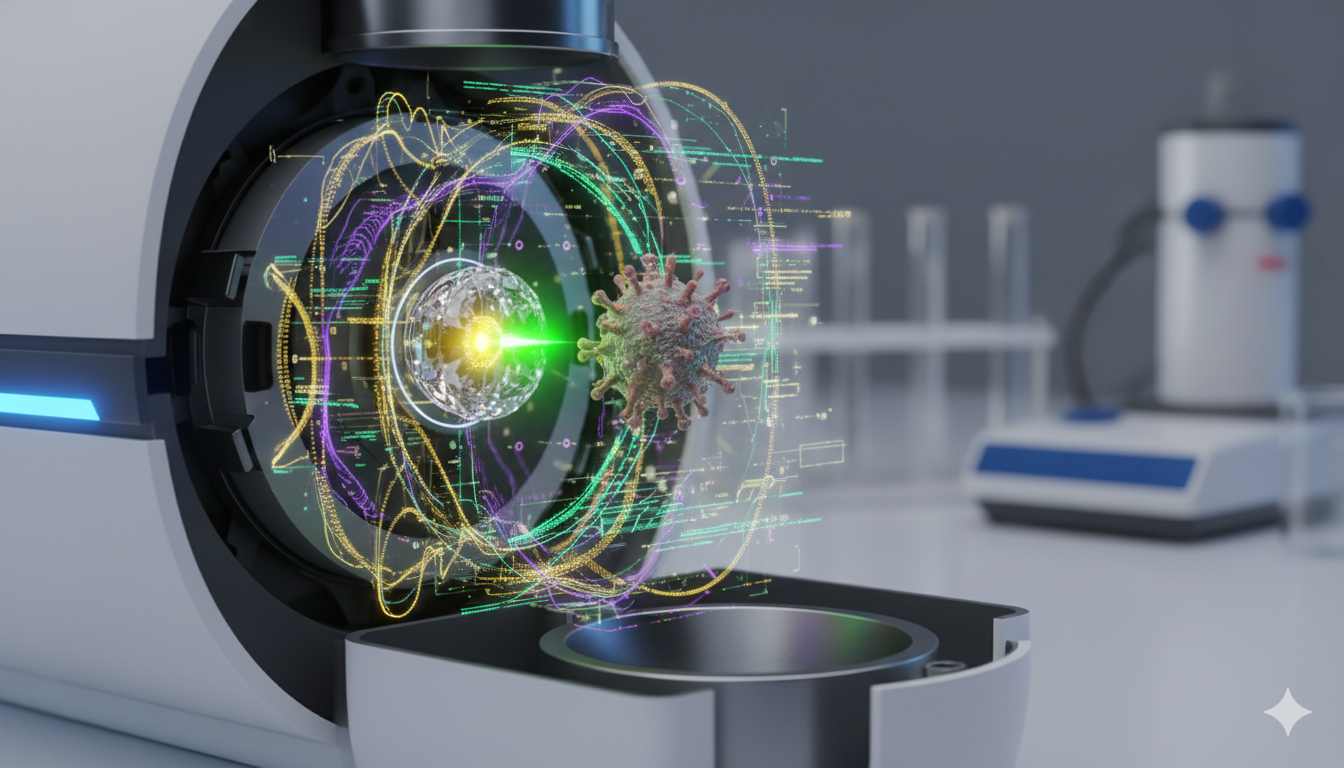
Quantum biosensing is no longer confined to theoretical physics—it has stepped into real-world clinical relevance. By leveraging principles like quantum superposition and entanglement, these novel sensors can detect biological phenomena with extraordinary sensitivity, bypassing the noise limitations inherent in classical sensors. Quantum biosensors are capable of sensing magnetic, thermal, and electrical fluctuations at atomic scales, allowing clinicians and researchers to observe processes such as protein folding, neuronal signaling, and early cancer biomarker emergence in real time.

With the global quantum sensor market projected to exceed $2.2 billion by 2045, healthcare is rapidly becoming its fastest-growing application area. These advances are pushing diagnostics from reactive to proactive—where diseases may be detected years before symptoms appear. In this landscape, the invisible is becoming visible, reshaping medicine into a data-driven and deeply predictive science.


Introduction

Biosensors have garnered attention for their potential to address a wide array of biomedical and public health issues. These include early disease diagnosis, identification of drug-resistant organisms, detection of emerging epidemics, and identifying low-concentration toxins and pathogens in food and water.

However, the road to developing these biosensors is fraught with challenges. They must be exquisitely sensitive, capable of detecting even the faintest traces of pathogens in biological fluids. Simultaneously, they must offer real-time results to enable swift medical interventions.

In the expansive landscape of healthcare, quantum biosensing emerges as a transformative technology that provides an unparalleled glimpse into the microscopic intricacies of biology. Leveraging the remarkable principles of quantum mechanics, this cutting-edge field holds the promise of overhauling healthcare diagnostics and detection, affording us the ability to delve into biological processes at previously inconceivable dimensions.

Through the harnessing of quantum phenomena, scientists are unlocking fresh avenues for swifter, more precise, and less intrusive approaches to disease detection, health monitoring, and the development of precisely targeted therapies. Within this article, we will embark on a captivating journey into the universe of quantum biosensing and its potential to redefine the future of healthcare.

Unrivaled Capabilities: Why Quantum Biosensing Outpaces Conventional Tools

To understand quantum biosensing, one must first grasp the fundamental principles of quantum mechanics, where matter behaves in ways that defy classical intuition. Central to this realm are superposition, which allows quantum bits (qubits) to exist in multiple states simultaneously, and entanglement, where particles become intrinsically linked such that the state of one instantly influences the other—regardless of distance. Another key concept is the No-Cloning Theorem, which states that quantum information cannot be copied, ensuring both the uniqueness and security of quantum states. While these properties may seem fragile, they are precisely what make quantum systems extraordinarily sensitive and capable, enabling a new generation of biosensors that can detect and interpret biological signals at unprecedented scales and precision.

Quantum sensing takes the inherent fragility of quantum systems and turns it into a remarkable advantage. When a quantum system in superposition interacts with its environment, it experiences a “collapse” of its superposition, reverting to a single state. In the field of quantum biosensing, this fragility becomes a powerful tool. Even the presence of a single molecule, atom, or photon can disrupt the superposition of a quantum system. This unique property transforms quantum systems into extraordinarily precise sensors for detecting the tiniest of particles.

Quantum sensors can measure an array of quantities with astounding precision, including time, magnetic fields, electrical fields, inertial forces, and temperature. They employ a variety of quantum systems, such as NV (nitrogen-vacancy) centers, atomic vapors, Rydberg atoms, and trapped ions, to provide unmatched insights into the microscopic world.

The promise of quantum biosensing lies in its unmatched ability to observe biological processes at the atomic scale with real-time precision. These advanced sensors operate with nanotesla-level magnetic sensitivity and can detect biochemical markers at picogram concentrations—orders of magnitude beyond the reach of classical systems. One powerful example is the emergence of optically pumped magnetometers (OPMs), which have revolutionized neuroimaging by enabling wearable, room-temperature brain scanners. These devices allow clinicians to capture high-resolution brain activity even in patients who are awake, moving, or in pediatric populations—scenarios previously limited by bulky, cryogenically cooled magnetoencephalography systems.

Unlike traditional diagnostic tools that offer a static snapshot, quantum biosensors continuously monitor biological phenomena, producing what can be described as a molecular “live feed.” This capability is a game-changer for applications such as drug development and cell biology, where researchers can now observe how individual cells respond to pharmaceuticals in real time. Quantum thermometry using nitrogen-vacancy (NV) centers in diamonds, for instance, can track intracellular temperature changes during drug uptake, providing early insight into both therapeutic efficacy and potential toxicity at the single-cell level.

When combined with artificial intelligence, quantum biosensing transcends conventional diagnostics to enable predictive medicine. AI models trained on quantum-derived datasets can interpret complex patterns of molecular activity—such as fluctuations in neurotransmitter levels or subtle electromagnetic shifts in tissues—to forecast the onset of neurodegenerative disorders like Alzheimer’s years before symptoms appear. This synergy of quantum precision and machine learning is not just enhancing diagnostics—it is paving the way for a new paradigm of anticipatory, personalized healthcare.

Quantum Biosensing Techniques

A diverse array of quantum-based techniques is transforming the landscape of biosensing, offering significant advantages over classical diagnostic tools in sensitivity, specificity, and spatial resolution. These emerging methods exploit quantum effects—such as superposition, tunneling, and entanglement—to detect and analyze biological signals at the molecular and atomic level, opening new frontiers in medical diagnostics, neuroimaging, and disease monitoring.

Quantum dots (QDs), which are nanoscale semiconductor particles, are among the most widely researched quantum tools for biosensing. When excited by a light source, they emit highly tunable and stable fluorescence, allowing researchers to track and label specific biomolecules with remarkable precision. Due to their narrow emission spectra and high signal-to-noise ratio, quantum dots are now being integrated into diagnostic assays and in vivo imaging platforms to detect cancer biomarkers, monitor drug delivery, and visualize disease progression in real time.

Quantum sensors, such as superconducting quantum interference devices (SQUIDs) and optically pumped magnetometers (OPMs), are capable of detecting infinitesimal changes in magnetic and electric fields. These sensors are finding increasing use in fields like magnetoencephalography (MEG), where they allow non-invasive monitoring of brain activity with unmatched temporal resolution. Unlike traditional techniques, these sensors can operate without cryogenic cooling and in mobile settings, significantly expanding their utility in clinical and field applications.

In parallel, quantum-enhanced magnetic resonance techniques, including Nuclear Magnetic Resonance (NMR) and Magnetic Resonance Imaging (MRI), remain foundational to modern diagnostics. Rooted in the quantum spin properties of atomic nuclei, these modalities provide detailed insight into the molecular structure and biochemical environment of tissues, enabling early detection of abnormalities from tumors to neurodegenerative lesions. Recent innovations now integrate hyperpolarization and quantum computing algorithms to push their sensitivity even further.

Finally, quantum entanglement is beginning to redefine the boundaries of detection in biosensing. By entangling particles, researchers can reduce noise and increase measurement precision beyond classical limits—a feature particularly promising for detecting rare biomolecular interactions or extremely low-concentration targets. This could lead to the development of biosensors that identify infectious agents, toxins, or genetic mutations with near-zero false positives.

As these techniques continue to evolve and converge with artificial intelligence, microfluidics, and lab-on-a-chip systems, quantum biosensing is well-positioned to become a mainstay of next-generation precision diagnostics.

Emerging Platforms Powering the Biosensing Revolution

The technological foundation of quantum biosensing is evolving at an unprecedented pace, with a diverse toolkit of quantum materials and devices now enabling breakthroughs across clinical domains. At the forefront are nitrogen-vacancy (NV) centers in diamond, prized for their extreme sensitivity to minute magnetic fluctuations at cellular scales. These quantum defects allow surgeons to map tumor margins in real time, providing precision-guided resections that minimize healthy tissue damage. Meanwhile, optically pumped magnetometers (OPMs) are redefining brain diagnostics—especially in neonatal care—thanks to their compact, room-temperature operation. Their portability allows for bedside assessment of critical conditions like brain hemorrhages, previously accessible only through cryogenic and immobile magnetoencephalography (MEG) systems.

Cutting-Edge Biosensing Platforms

Technology Mechanism Clinical Use Case
NV-Diamond Centers Fluorescence shift under magnetic fields Tumor margin mapping during surgery
Optically Pumped Magnetometers Altered spin states in alkali vapors Neonatal brain hemorrhage screening
Quantum Tunneling Junctions Photon emission via electron tunneling Lab-on-chip COVID diagnostics
DNA-Stabilized Quantum Clusters (QC-DNA) Metal cluster fluorescence Early detection of pancreatic cancer

Emerging technologies are also reshaping point-of-care diagnostics and biomarker detection. Quantum tunneling junctions, which emit photons through the controlled tunneling of electrons, are now integrated into lab-on-chip biosensors capable of detecting viral pathogens like SARS-CoV-2 within minutes, without requiring amplification. Equally innovative are DNA-stabilized quantum clusters (QC-DNA)—a novel class of fluorescent probes that leverage stabilized metal nanoclusters for ultra-specific detection of disease biomarkers such as those linked to pancreatic cancer. These nanosensors require only trace sample volumes, making them ideal for minimally invasive diagnostics with high throughput and precision. Together, these technologies signal a shift toward quantum-enabled diagnostics that are faster, more sensitive, and deployable beyond specialized laboratories.

Revolutionary Applications Already Impacting Medicine

Quantum biosensing holds immense promise to revolutionize healthcare by enabling us to observe and interpret biological activity at the atomic and molecular scale—levels at which many critical physiological processes originate. Events such as ion transport across membranes, protein conformational changes, or slight shifts in molecular charge play foundational roles in health and disease, yet have long eluded precise measurement. Quantum biosensors, with their unprecedented sensitivity, are now making it possible to detect and quantify these subtle phenomena in real time and with unparalleled accuracy.

At its core, quantum biosensing is like equipping biology with a microscope capable of seeing not just cells, but individual atoms and their behavior. Using platforms such as nitrogen-vacancy (NV) centers in diamond or optically pumped magnetometers (OPMs), scientists can now track the real-time movement of molecules across cell membranes, measure electromagnetic signals in living tissues, and even map tumor boundaries intraoperatively. These tools are proving invaluable in decoding complex processes like protein folding, signal transduction in neurons, and intracellular temperature variations—providing insights that were previously out of reach.

Through these capabilities, quantum biosensing is opening entirely new vistas in healthcare, bridging the microscopic world of molecular biology with actionable clinical insights. By combining atomic-scale resolution with dynamic monitoring and integration with AI, this technology is poised to become a cornerstone of the next era in precision medicine.

Real-world applications of this technology are already beginning to reshape diagnostics and therapeutics. In oncology, quantum sensors are being designed to detect tumor biomarkers—such as exosomes or mutated proteins—circulating in blood, enabling earlier and more precise cancer diagnoses. In neurology, wearable OPM-based brain imaging systems offer high-resolution, motion-tolerant neuroimaging that could transform the diagnosis and treatment of epilepsy, ADHD, and traumatic brain injury.

Perhaps the most dramatic change has been in early-stage disease detection. NV-diamond biosensors, which utilize nitrogen-vacancy centers in synthetic diamond, have demonstrated the ability to detect cancer-derived exosomes in blood samples at the elusive stage zero. Similarly, researchers at EPFL have created quantum tunneling biosensors that can identify specific cancer proteins at picogram levels—without needing external light sources—opening the door to ultra-portable diagnostic devices.

In neurological imaging, wearable MEG systems powered by OPMs are transforming care for epilepsy and traumatic brain injury (TBI). Unlike conventional magnetoencephalography that requires a rigid helmet and stationary setup, these systems adapt to patient movement, allowing detailed brain recordings even in children. In one landmark trial, triaxial OPMs enabled 90-channel brain imaging in children with ADHD—providing insights into motor function that were previously impossible.

Meanwhile, in pharmacology, quantum sensors allow researchers to monitor how drugs interact with living tissues at the single-cell level, informing the development of safer and more effective therapeutics. Moreover, by continuously monitoring biomarkers, quantum devices may soon enable personalized, real-time feedback on how patients are responding to treatments—paving the way for more adaptive and successful medical interventions.

The potential also extends into drug development and cellular biology, where NV center thermometry allows the tracking of intracellular temperature changes in response to drugs. Meanwhile, graphene quantum dots not only cross the blood-brain barrier to deliver treatments but also report their biodistribution via near-infrared fluorescence, making every dose a sensor in itself. These tools enable highly personalized therapies and fast-track precision drug design.

Even in infectious disease diagnostics, quantum biosensing is breaking barriers. Quantum relaxometry sensors have detected SARS-CoV-2 RNA at incredibly low concentrations—without the need for amplification—resulting in near-zero false-negative rates. Additionally, cadmium-telluride quantum dots have been deployed to flag antibiotic-resistant bacteria within 15 minutes, an innovation that could be critical in tackling superbugs in hospital settings.

Overcoming Technical and Practical Barriers

Despite its revolutionary promise, quantum biosensing still faces a host of technological and logistical challenges. The delicate nature of quantum systems makes them notoriously difficult to stabilize in real-world environments, where temperature fluctuations, electromagnetic noise, and mechanical vibrations can collapse fragile quantum states. Equipment such as nitrogen-vacancy diamond sensors and superconducting devices often requires high-cost fabrication and highly trained personnel, limiting their current deployment to advanced research facilities and specialized medical labs.

However, rapid innovation is steadily dismantling these barriers. Emerging technologies—such as room-temperature silicon quantum dots, MEMS-based optically pumped magnetometers, and AI-assisted quantum error correction—are making quantum biosensors more resilient, compact, and cost-effective. Researchers are now developing devices that can operate outside laboratory conditions, in fluidic biological environments, and even within the human body. These advances are transforming quantum biosensing from a niche scientific tool into a scalable diagnostic platform for mainstream healthcare.

 One of the most pressing challenges is quantum decoherence—the tendency for quantum states to rapidly deteriorate in the presence of environmental noise, which can compromise data fidelity. However, cutting-edge AI-driven stabilization techniques, such as Q-CTRL’s adaptive quantum error correction algorithms, are beginning to address this issue. These solutions are significantly enhancing the stability and coherence time of quantum systems, allowing for more accurate and extended sensing operations. Cost has also posed a notable barrier, especially in systems based on nitrogen-vacancy (NV) diamond sensors, which rely on expensive lab-grown diamonds. To combat this, new developments in microelectromechanical systems (MEMS) are yielding chip-scale optically pumped magnetometers (OPMs) that cut production costs by up to 70%, positioning quantum sensors as practical tools for everyday diagnostics.

Moreover, the historical dependency on cryogenic cooling—once necessary to maintain the delicate quantum conditions of many sensors—is rapidly diminishing. Breakthroughs in room-temperature quantum platforms, such as silicon-based quantum dots, are enabling the creation of compact, low-power biosensors that are not only portable but also affordable. These technological shifts are making it possible to deploy quantum biosensing systems in diverse environments—from sophisticated hospital networks to under-resourced rural health clinics. As a result, quantum diagnostics are transitioning from elite research tools into scalable, accessible solutions with global impact potential.

Despite its promise, quantum biosensing still faces several obstacles. Chief among them is quantum decoherence, where fragile quantum states collapse due to environmental noise. Fortunately, AI-driven stabilization technologies—such as Q-CTRL’s quantum error correction algorithms—are dramatically extending coherence times, enabling more robust data collection. High costs have also been a constraint, especially with NV-diamond sensors relying on lab-grown diamond substrates. However, recent advances in MEMS-fabricated chip-scale OPMs are reducing production costs by up to 70%, bringing them closer to point-of-care viability.

Cryogenic cooling systems, once seen as essential for many quantum devices, are giving way to room-temperature platforms like silicon-based quantum dots, allowing the design of handheld biosensors suited for low-resource settings. These shifts are democratizing access to quantum diagnostics, making them feasible in both high-tech hospitals and rural clinics alike.

Manipulating Quantum Biosensors in Real-World Conditions

Quantum biosensors, renowned for their unparalleled sensitivity, are often confined to highly controlled laboratory environments—such as vacuum chambers and cryogenic setups—to maintain quantum coherence. Yet, the true potential of quantum sensing lies in its application within the complex, dynamic conditions of real biological systems. To transition from isolated “snapshots” to continuous, real-time “movies” of cellular and molecular activity, researchers are working to make quantum sensors adaptable to room temperature, wet environments, and non-invasive formats. This shift is critical for enabling practical deployment in clinical diagnostics, environmental monitoring, and even in-field biomedical research.

One of the most promising tools in this endeavor is quantum dots (QDs)—nanoscale semiconductors that fluoresce under light stimulation. These particles are revolutionizing the detection of residual antibiotics, which pose serious ecological and health risks when they enter ecosystems via wastewater or agricultural runoff. QDs’ high signal brightness, multi-color fluorescence, and tunable size make them ideal for biosensing. Silicon QDs offer biocompatibility and biodegradability, while chalcogenide QDs (such as CdTe and CdSe) excel in optical performance and have already demonstrated potential in cancer diagnostics. Meanwhile, graphene QDs are making headway in drug delivery and multi-functional biosensing applications, offering new pathways for real-time, precise environmental and clinical monitoring.

Complementing these materials-based innovations are nitrogen-vacancy (NV) centers in diamonds, which offer high-resolution detection of electromagnetic fields and temperature changes within living cells. NV centers are defects in diamond structures that fluoresce under light and respond to subtle changes in biological environments. They have proven especially valuable in detecting brain currents and identifying early markers of neurodegenerative diseases. Techniques like pulsed optically detected magnetic resonance (ODMR) further enhance the sensitivity of NV-based sensors, allowing researchers to observe biological signals at the nanoscale with unprecedented accuracy. At institutions like the University of Waterloo, simulations suggest NV-diamond sensors could even enable rapid and affordable detection of viruses such as SARS-CoV-2—highlighting the potential of quantum biosensing to address pressing global health challenges in real time.

What’s Next? Frontier Technologies on the 2025 Horizon

The convergence of quantum engineering and biomedicine is pushing the frontiers of what we can detect, visualize, and understand. In the near future, biosensors could capture electric field fluctuations in neuronal synapses, monitor the real-time folding of proteins linked to degenerative diseases, or track individual ions moving through cellular ion channels. These capabilities—once confined to theoretical models—are now within scientific reach, offering a new lens to study disease, metabolism, and cellular communication in their natural biological context.

The frontier of quantum biosensing is rapidly advancing, with researchers and startups pushing the boundaries of what’s possible. At the École Polytechnique Fédérale de Lausanne (EPFL), engineers have developed self-illuminating quantum plasmonic biosensors that embed light sources directly into the sensor architecture. This innovation eliminates the need for external lasers or bulky optics, paving the way for compact, palm-sized diagnostic devices suitable for point-of-care and remote settings. These biosensors operate with exceptional sensitivity and speed, detecting biochemical interactions in real time, even in low-resource environments.

Meanwhile, companies like SandboxAQ are leading the convergence of quantum hardware and artificial intelligence. Their quantum inertial navigation systems, combined with machine learning algorithms, are being adapted for surgical settings where GPS is unavailable or unreliable—such as inside the human body or shielded hospital wings. This fusion of quantum precision and AI-driven interpretation could soon guide robotic surgical instruments with nanometer-scale accuracy, reshaping the standard for minimally invasive procedures.

Perhaps one of the most transformative innovations on the horizon is multi-organelle biosensing using nitrogen-vacancy (NV) doped nanodiamonds. These specialized nanomaterials can simultaneously monitor temperature, pH levels, and electromagnetic fluctuations inside a single cell or neuron. For the first time, clinicians and researchers may be able to visualize, in real time, how neurodegenerative diseases like Parkinson’s or Alzheimer’s alter cellular behavior—offering new pathways for early intervention and personalized treatments. This kind of ultra-resolved, multidimensional data could be the key to decoding the language of cellular dysfunction.

As these technologies mature, they are expected to migrate from elite research labs into mainstream clinical applications, powered by falling production costs, AI-driven sensor optimization, and growing global investment. The 2025 horizon represents not just a technological inflection point, but a philosophical shift in healthcare: from reactive diagnosis to anticipatory insight—guided by the subtle whispers of quantum biology.

Market Dynamics and Global Investment Surge

Global momentum is building fast. In 2024 alone, over $680 million in public investment poured into quantum biosensing ventures. Companies like Cerca Magnetics, known for wearable MEG systems, and Qnami, creators of the ProteusQ quantum microscope, are setting commercial standards. QuantX Labs is another standout, with its precision timing devices helping synchronize MRI data using quantum clocks.

Government initiatives are reinforcing this momentum. The U.S. NIH recently launched a $25 million Quantum Biosensing Consortium, while the EU’s Quantum Flagship program is building pilot lines specifically for medical quantum sensors. These coordinated efforts are designed to scale manufacturing, ensure regulatory pathways, and accelerate clinical integration.

Project BioSensing is a pioneering European collaboration led by two Fraunhofer Institutes in Germany and Leiden University’s Institute of Physics, aiming to revolutionize biosensing through quantum technology. The project centers on DNA-stabilized metal quantum clusters (QC-DNAs)—ultrasmall structures formed by metal atoms embedded in short DNA strands. These clusters act as programmable quantum biosensors, whose properties can be tuned by altering the DNA sequence to detect specific diseases or biological markers. With the added ability to respond to environmental changes such as salt concentration, QC-DNAs also hold promise for applications in food safety and environmental monitoring. A key strength of this technology is its low-cost and scalable production, making it ideal for widespread use. Project BioSensing is now moving from lab prototypes to clinical settings, with pilot studies planned in university hospitals. Researchers are also developing a portable, laser-based sensor that can detect and quantify viral RNA—such as SARS-CoV-2—with exceptional sensitivity (detecting just a few hundred strands) and a false negative rate below 1%, outperforming RT-PCR without the need for amplification. Scalable for multi-sample testing and adaptable to other RNA viruses or cancer biomarkers, the project exemplifies how quantum biosensing is evolving into a practical, affordable, and intelligent diagnostic platform for future medicine.

The Road to 2030: Transforming Medicine Before Symptoms Arise

As we approach 2030, quantum biosensing is poised to fundamentally reshape medicine—not by treating disease after it appears, but by preventing it before symptoms ever manifest. The vision includes implantable quantum sensors capable of continuously monitoring the human body at the molecular level. These sensors will build real-time, individualized “disease atlases” by tracking early-stage biomarkers of cancer, Alzheimer’s, Parkinson’s, and autoimmune disorders. Such pre-symptomatic surveillance could give clinicians a five- to ten-year head start on intervention, transforming how we define diagnosis and care.

Beyond the clinic, quantum technology is evolving into a cornerstone of public health infrastructure. One promising application is the deployment of airport-based quantum “sniffers”—high-throughput biosensors capable of identifying hundreds of pathogens, including emerging viruses, in seconds. These devices could enable decentralized, contactless pandemic surveillance, preventing global outbreaks before they spread. By leveraging quantum-enhanced sensitivity and AI-driven classification models, such systems may redefine how nations detect, respond to, and contain infectious threats.

This bold transformation is more than technical; it is existential. As Prof. Peter Maurer of the University of Chicago observed, “Quantum sensing isn’t just improving diagnostics—it’s redefining the boundaries of life itself. We’re now detecting biology’s faintest whispers.” In those whispers lies a future where healthcare shifts from episodic and reactive to continuous and predictive—a future where illness becomes an anomaly, not an inevitability.

Ultimately, quantum biosensing represents more than just an upgrade in medical diagnostics—it signifies a paradigm shift. As this technology matures, it promises not only faster and more accurate disease detection, but a fundamentally deeper understanding of life at its most elemental level. In a world where early diagnosis can mean the difference between life and death, quantum biosensors could become the gold standard of precision medicine. This is not merely a step forward in diagnostics; it is a quantum leap toward a healthier, more predictive future.

Conclusion: Making the Invisible, Actionable

The invisible revolution of quantum biosensing is no longer a distant possibility—it is actively reshaping the landscape of modern healthcare. By detecting molecular signatures at near-imperceptible levels, these tools are enabling earlier interventions, more precise treatments, and continuous health monitoring tailored to each individual’s biology.

The convergence of AI, advanced materials, and quantum technologies is dismantling the diagnostic delay and ushering in an era of anticipatory medicine. With 2025 designated the International Year of Quantum Science, this field will likely receive global attention and funding to match its immense potential. For healthcare, the quantum age is no longer theoretical—it has begun, and it’s changing what we know, when we know it, and how we act on it.


References & Further Reading

  1. Quantum Sensors for Biomedical Applications (Nature Reviews, 2023)
  2. EPFL’s Self-Illuminating Biosensor Breakthrough (2025)
  3. Global Quantum Sensor Market 2025-2035
  4. Wearable Quantum MEG in Clinical Practice (NeuroImage, 2025)

References and Resources also include:

https://www.techexplorist.com/understanding-biology-using-quantum-technology/42645/

https://chicagoquantum.org/news/quantum-biosensing-medicine-smallest-scales

https://physicsworld.com/a/quantum-sensor-could-detect-sars-cov-2/

http://Recent advances in quantum dots-based biosensors for antibiotics detection

About Rajesh Uppal

Check Also

The Cosmic Breath of Life: Hunting Alien Atmospheres in the Era of Starlight Suppression

For millennia, the question “Are we alone?” echoed unanswered across civilizations. Today, scientific progress is …

wpChatIcon
wpChatIcon