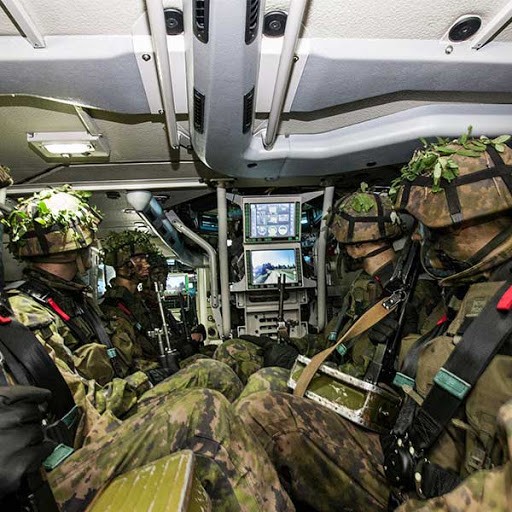
Introduction: The Vetronics Imperative
In the rapidly evolving domain of modern warfare, technological supremacy is no longer optional—it is essential. Military forces worldwide are under increasing pressure to modernize their fleets with advanced electronic information, command, and control systems. Over the past decade, the demand for combat vehicles that offer improved crew survivability, intuitive navigation, enhanced surveillance, seamless inter-vehicle communication, and superior firepower has driven a transformational shift. At the center of this evolution lies vetronics—the integration of vehicle electronics that forms the digital nervous system of today’s military land platforms.
Short for Vehicle Electronics, vetronics refers to the embedded suite of advanced systems that enable real-time data processing, situational awareness, and battlefield interoperability. This technology has redefined the capabilities of land vehicles, turning armored platforms into intelligent, networked assets capable of operating in complex and contested environments.
The battlefield of 2025 is no longer defined by raw firepower alone—it operates at machine speed, where decisions must be made in milliseconds within a hyperconnected, sensor-rich, and information-dense arena. In this new paradigm, vetronics is not merely an enhancement—it is the backbone of military effectiveness. Global investment reflects this reality: the vetronics market, valued at $5.7 billion in 2024, is projected to grow to $7.2 billion by 2030, with a CAGR of 4%.
Envision a battlefield where tanks anticipate enemy maneuvers, armored personnel carriers self-diagnose mechanical faults, and infantry fighting vehicles autonomously adapt to threats in real time. What once seemed futuristic is now within reach, thanks to innovations in vetronics and open architecture initiatives such as CMOSS (C4ISR/EW Modular Open Suite of Standards), which enables plug-and-play integration across diverse systems.
What Exactly Is Vetronics?
Vetronics, short for vehicle electronics, refers to the sophisticated integration of electronic subsystems within military land vehicles. It encompasses a wide range of capabilities—including surveillance, communications, command and control (C2), electronic warfare (EW), navigation, vehicle protection, propulsion, power management, and weapons systems—and crucially, the networking of these systems to function as a unified whole.
Think of vetronics as the digital nervous system of a modern combat vehicle. Much like a human nervous system coordinates movement, perception, and reaction, vetronics fuses sensors, processors, displays, and control interfaces to create an intelligent combat platform. In practice, this means a tank equipped with vetronics can pinpoint enemy positions, predict their maneuvers, automatically adjust fire control systems, and alert crews to incoming threats—all in real time.
In a single generation, military land vehicles have evolved from rugged mechanical platforms into rolling supercomputers—equipped with more processing power than command centers of the past. Beyond individual capability enhancements, vetronics plays a vital role in interoperability—enabling seamless data exchange between vehicles, command centers, drones, and other battlefield assets. Upgrading legacy platforms with modern vetronics reduces the burden of integrating multiple standalone systems, improves operator responsiveness, and significantly boosts mission reliability and survivability.
With global armed forces striving to maintain technological superiority, vetronics modernization has become a critical priority. Nations are investing in advanced, modular vetronics architectures not only to enhance vehicle performance, but also to ensure that future upgrades can be implemented rapidly and cost-effectively.
However, this surge in technological complexity brings with it pressing questions. How can we ensure these systems remain interoperable with aging platforms? How do we secure such vast digital infrastructure against ever-evolving cyber threats? And perhaps most importantly, how do we design vetronics systems to be modular and upgradeable, ready to integrate the innovations of tomorrow? These challenges—and the technologies poised to address them—are redefining not only the nature of combat vehicles, but the very future of land warfare itself.
Applications and Emerging Technologies
Vetronics technology has become a cornerstone of modern military operations, fundamentally reshaping how ground vehicles are designed, equipped, and deployed on the digital battlefield. Its applications span a wide range of platforms, including Unmanned Ground Vehicles (UGVs), Light Protected Vehicles, Special Purpose Vehicles, and Armored Amphibious Vehicles. As the demand for autonomous systems grows, particularly in high-risk or contested environments, the integration of artificial intelligence (AI) and self-regulating mechanisms into unmanned platforms is becoming increasingly critical.
A key area of innovation is the development of digitalized cockpits that feature multiple widescreen displays, touch-enabled controls, and adaptive interfaces. These cockpits are transforming traditional crew environments by improving situational awareness, reducing cognitive load, and enabling faster, more accurate decision-making. Complementing this are advancements in on-board diagnostics, which allow vehicles to self-assess performance, detect mechanical issues early, and recommend predictive maintenance—reducing downtime and enhancing operational readiness.
At the architectural level, modern vetronics is moving toward network-enabled warfare, with vehicles acting as mobile data nodes within broader combat information networks. To support this vision, industry stakeholders are prioritizing open architecture systems that support plug-and-play upgrades, as well as initiatives focused on Size, Weight, and Power (SWaP) optimization. These advancements not only reduce logistical burdens but also free up space and energy for advanced payloads like electronic warfare modules and high-power sensors.
The increasing sophistication of wireless communication technologies is also expanding the capabilities of vetronics. High-bandwidth, secure data links now support real-time communication between vehicle systems, dismounted soldiers, UAVs, and command centers. This enhanced connectivity is especially vital for electronic warfare, command and control (C2) operations, and integrated surveillance functions—areas where rapid data exchange is crucial for mission success.
Manufacturers are responding to evolving battlefield demands by modernizing their offerings with next-generation vetronics systems. These systems offer not only enhanced performance but also modularity, allowing militaries to field-upgrade platforms without full system overhauls. This is particularly important as vehicle electronic warfare (EW) becomes a defining factor in ground combat, where control of the electromagnetic spectrum can determine the outcome of engagements.
Situational Awareness Reinvented
Situational awareness—the ability to perceive, process, and respond to battlefield dynamics in real time—remains one of the most decisive factors in modern military operations. In today’s complex and rapidly shifting combat environments, traditional means of threat detection and decision-making are no longer sufficient. This is where vetronics delivers a game-changing advantage, fundamentally transforming how military personnel perceive and engage with their surroundings.
By integrating intelligence, surveillance, and reconnaissance (ISR) capabilities directly into ground vehicles, vetronics systems enable combat units to operate with heightened awareness, speed, and precision. Advanced onboard sensors continuously gather mission-critical data, empowering warfighters to assess threats, track movements, and respond more effectively—all while enhancing crew safety and operational effectiveness.
Ultimately, vetronics redefines situational awareness from a passive, crew-dependent function into an active, automated, and predictive capability—one that offers a decisive edge in today’s data-driven theaters of war.
Core Components of Modern Vetronics
These capabilities are made possible by the seamless fusion of radar systems, infrared thermal imaging, laser rangefinders, and high-definition optical cameras. Combined with AI-powered data analytics at the edge, this sensor suite allows vehicles to detect, identify, and track both adversaries and allied forces in real time, even in GPS-denied or low-visibility environments.
The Sensor Revolution
Modern combat vehicles have transcended the limitations of human perception. Multi-spectral detection systems now integrate thermal imaging, LiDAR, and radar to produce 360-degree situational awareness. These sensors are fused with onboard AI analytics capable of classifying and prioritizing threats nearly 50% faster than a human operator. Vehicles are no longer just weapons—they’re intelligent nodes on a dynamic network. Electronic Warfare (EW) subsystems are now embedded by default, enabling vehicles to jam drone swarms, disrupt enemy communications, or spoof GPS signals.
A notable example of this fusion is Rheinmetall’s HX3 truck, which incorporates the Integrated Vision Augmentation System (IVAS). This system overlays terrain data, enemy positions, and friendly troop movements onto the visors of vehicle crews, fusing physical and digital realities in real time.
Enhanced Communication Networks: Enabling Seamless Connectivity
Modern military operations demand uninterrupted, high-fidelity communication between soldiers, vehicles, and command infrastructure. Advanced communication networks embedded within land platforms now serve as the backbone of this real-time connectivity. At the heart of this transformation are software-defined radios (SDRs) and tactical data links, which offer secure, high-speed transmission of voice, video, and sensor data across dispersed and dynamic battlefields.
These networks are engineered to function reliably in diverse operational environments, from dense urban terrain to remote, GPS-denied regions. They support adaptive frequency hopping, encryption, and self-healing mesh topologies, ensuring that communications remain resilient against electronic warfare and signal degradation. By enabling the rapid and secure exchange of mission-critical data, these systems significantly enhance coordination, situational awareness, and command responsiveness—factors that are increasingly decisive in multi-domain operations.
Ultimately, seamless digital connectivity empowers units to act with greater precision and unity, creating an operational advantage where split-second decisions, based on a shared tactical picture, can dictate the outcome of engagements. As vetronics continues to evolve, communication systems are becoming not just tools of coordination—but enablers of faster, smarter warfare.
AI: The Brain Behind the Armor
At the heart of next-generation vetronics lies Artificial Intelligence (AI)—the digital brain transforming military vehicles from reactive platforms into predictive, adaptive, and autonomous combat assets. As the complexity of battlefield data grows, AI plays an increasingly vital role in making sense of that information, converting raw sensor inputs into rapid, actionable insights.
AI-powered algorithms process vast volumes of real-time data from integrated sensors, radar systems, optical cameras, and communications networks. These systems are capable of distinguishing between friend and foe, analyzing behavioral patterns in enemy movements, and even predicting the likelihood of attacks. This shift from reactive decision-making to proactive battlefield awareness allows ground forces to stay one step ahead, improving survivability and tactical effectiveness.
One of the most impactful applications of AI in vetronics is predictive maintenance. By continuously monitoring the internal health of critical subsystems—such as engines, powertrains, and cooling systems—AI can detect anomalies before they result in failure. This not only minimizes unplanned downtime but can also reduce maintenance costs and extend the operational lifespan of military vehicles. Studies show such systems can cut unexpected downtime by up to 30%.
AI also empowers autonomous navigation, a critical capability in GPS-denied or electronically contested environments. Leveraging onboard sensors and learning algorithms, vehicles can now perform terrain mapping, path planning, and obstacle avoidance without human intervention—a crucial advantage during electronic warfare or deep reconnaissance missions.
In combat, AI-enabled threat prioritization engines interpret incoming sensor data and rank threats based on type, proximity, lethality, and velocity. These engines recommend optimal countermeasures—ranging from evasive maneuvers to active protection responses—within milliseconds, ensuring vehicle crews can respond faster than human reflexes alone would allow.
A standout example of AI’s rapid integration into military platforms is Ukraine’s DeCenter initiative, which has pioneered decentralized, brigade-level AI deployment. By bypassing traditional procurement bottlenecks and enabling small teams to field and iterate on AI systems quickly, Ukraine has shortened deployment timelines from months to days—setting a precedent for agile, tech-driven warfare.
Ultimately, AI is no longer an emerging feature—it is the cognitive engine driving the next evolution of digital combat vehicles. As AI continues to mature, its role in vetronics will only deepen, unlocking new dimensions of battlefield autonomy, coordination, and survivability.
Enhanced Crew Interfaces and Intelligent Autonomy
Modern vetronics has redefined the human-machine interface within military land vehicles, transforming once-cluttered cockpits into streamlined, intuitive environments. Touchscreen displays, augmented reality (AR) overlays, and voice-activated controls have replaced rows of analog dials and switches, allowing operators to interact with complex systems more naturally and efficiently. These technologies are designed not just for convenience, but for combat effectiveness—reducing cognitive load during high-stress engagements and enabling crews to focus on mission-critical tasks with greater speed and accuracy.
The integration of AR, in particular, enables vehicle crews to overlay battlefield data directly onto their field of view—highlighting enemy positions, navigation routes, or system diagnostics in real time. Combined with ergonomic control layouts and adaptive interfaces, these enhancements ensure that vehicle operators can process more information with less distraction, improving decision-making and coordination in fast-paced operational environments.
At the same time, vetronics is laying the foundation for a new era of autonomy and robotics in ground warfare. By embedding intelligent systems into vehicles, platforms can now perform a wide range of functions without constant human input. Semi-autonomous systems assist with navigation, terrain analysis, and obstacle avoidance, while fully autonomous systems are beginning to take on more advanced roles, such as patrol, perimeter defense, and target engagement under tightly controlled conditions.
The convergence of robotics and vetronics is particularly evident in the rise of Unmanned Ground Vehicles (UGVs). These robotic platforms, equipped with advanced sensors and AI, can undertake reconnaissance, surveillance, and resupply missions in hazardous or denied areas—dramatically reducing the risk to human personnel. Some UGVs are also capable of executing electronic warfare operations or acting as decoys, amplifying their strategic value on the battlefield.
By fusing intelligent autonomy with advanced human-machine interfaces, modern vetronics is not only enhancing how vehicles are operated, but also who—or what—is operating them. The result is a new generation of combat vehicles that are smarter, more adaptable, and increasingly capable of acting independently across diverse mission sets.
Network-Centric Warfare and Open Architectures
The modern battlefield is increasingly defined by network-centric warfare, where real-time data sharing and seamless coordination are paramount to mission success. In this environment, vetronics plays a central role—not only by enhancing individual vehicle performance, but by enabling platforms, personnel, and command structures to operate as a synchronized, data-driven ecosystem.
With network-enabled vetronics, information gathered by one vehicle—such as enemy positions, environmental conditions, or sensor alerts—can be instantly disseminated across units, command centers, drones, and allied assets. This collaborative sensing framework significantly accelerates decision-making at the tactical edge, reducing response time and improving battlefield survivability.
Tactical data links serve as the digital arteries of this system, facilitating real-time coordination between ground and aerial units. Even under conditions of electronic warfare and active jamming, 5G-enabled mesh networks maintain communications through self-healing protocols that reroute data dynamically. These resilient communication infrastructures ensure persistent connectivity in high-threat environments. Meanwhile, interoperability standards like NATO STANAG 4760 ensure that multinational coalition forces can share data and operate cohesively, regardless of platform origin.
Central to this transformation is the adoption of modular open architectures, particularly the C4ISR/EW Modular Open Suite of Standards (CMOSS). CMOSS provides a standardized framework that streamlines subsystem integration, enabling plug-and-play capability across electronic warfare, command-and-control, and ISR applications. This open approach drastically reduces lifecycle costs, simplifies platform upgrades, and accelerates time-to-field for new technologies.
Traditionally, integrating or updating electronic subsystems in military vehicles was a time-consuming and expensive endeavor. New hardware often required custom wiring, proprietary interfaces, and months of compatibility testing. CMOSS disrupts that model by defining a reference architecture and open interface standards, allowing interoperable components from different vendors to be integrated with minimal effort or disruption.
Shaun Fischer, Division VP at Abaco Systems, notes that CMOSS can eliminate much of the expense and downtime associated with subsystem upgrades. By enabling quick swaps of sensors, processors, or communications modules, armed forces can keep pace with rapid technological evolution. Curtiss-Wright’s John Ormsby adds that this flexibility is also crucial for cybersecurity, allowing for rapid patching and system hardening without overhauling the vehicle’s core electronics.
BAE Systems has already embraced CMOSS across several U.S. Army programs. According to Mark Brinkman, CMOSS not only mitigates the challenges of subsystem obsolescence but also supports the deployment of mission-critical applications such as AI-assisted targeting and autonomous navigation. Paul Mehney of Thales Defense & Security emphasizes that interest in CMOSS extends beyond the U.S.—NATO allies and coalition partners are increasingly adopting the standard to harmonize their own vehicle platforms and ensure seamless interoperability during joint operations.
In short, network-centric warfare demands agile, interoperable, and upgradeable platforms. Vetronics powered by open architectures like CMOSS is making this vision a reality, creating smart, connected, and future-ready land combat systems.
Looking ahead, emerging technologies are pushing the boundaries of what’s possible. Future combat vehicles are expected to feature AI-assisted reasoning, laser/radar-based long-range target acquisition, and even stealth capabilities. The trend toward embedded systems and ruggedized computing platforms is accelerating, enabling military platforms to function reliably in harsh, contested environments. As a result, the vetronics market is poised for continued growth, driven by the convergence of digital transformation, operational flexibility, and battlefield survivability.
Market Dynamics and Technological Frontiers
In 2025, the global vetronics market is defined by rapid innovation and expanding use cases. Main battle tanks are driving a $2.8 billion share of the market, primarily due to AI-based fire control systems and active protection upgrades. Infantry fighting vehicles dominate with $10.7 billion, reflecting their role as mobile C4ISR hubs. Unmanned Ground Vehicles (UGVs) are growing at the fastest rate as militaries seek autonomous capabilities in reconnaissance and logistics. Asia-Pacific, led by China and India, is accelerating at a 6.8% CAGR through aggressive modernization programs.
Open architectures like CMOSS also support software-defined radio (SDR) technology, which enables radio capabilities to be upgraded via software rather than hardware. While integrating SDR into CMOSS systems poses challenges—especially in aligning computing cards with RF power amplifiers—vendors are making significant progress. Pacific Defense’s SX-3000 CMFF system, for instance, is one example of how modular form factors are evolving. The U.S. Army has created the CMFF (CMOSS Mounted Form Factor) to support SWaP-optimized, vehicle-ready electronics designed for rapid field upgrades. The CMFF chassis leverages standards like SOSA, FACE, VICTORY, and MORA to ensure cross-platform compatibility and minimal downtime.
Emerging technologies are pushing the boundaries further. Cybersecurity hardening through zero-trust architectures and quantum encryption is becoming standard to prevent system breaches. Hybrid power systems now offer “silent watch” capabilities, extending mission endurance without engine noise. The concept of human-machine teaming is gaining ground, with crewed vehicles operating drone swarms or remote weapons directly from within the platform.
Beyond the Battlefield
The innovations driven by military vetronics are increasingly making their way into civilian domains, catalyzing advancements in fields such as autonomous transportation, emergency response, and smart infrastructure management. Technologies originally developed for combat vehicles—such as advanced sensor fusion, real-time diagnostics, and resilient communication systems—are now being adapted to improve the safety, efficiency, and intelligence of civilian platforms.
In autonomous vehicles, for example, military-grade LiDAR and AI-powered navigation systems are enhancing object detection and decision-making capabilities under complex conditions. Emergency response units are adopting battlefield-tested situational awareness tools to coordinate rescue operations more effectively in disaster zones. Even in infrastructure management, ruggedized monitoring systems inspired by vetronics are being used to oversee power grids, transportation networks, and environmental conditions in real time. By bridging military innovation with civilian application, vetronics is not only redefining the future of defense—but also shaping a smarter, more connected world.
Strategic Implications and Global Trends
Global investment in vetronics is surging. North America retains a 40% market share, thanks in part to large-scale digital modernization efforts like the U.S. Army’s $72.5 million upgrade of the M109A7. In Europe, the Franco-German MGCS project is building AI-driven battle tanks slated for 2035 deployment. China is planning $8.5 billion in land vehicle investments by the end of the decade, with a focus on indigenous AI and EW capabilities.
Defense giants are racing to capture this evolving market. Raytheon secured a $10 million DARPA POWER contract to develop laser-powered wireless energy transfer systems. Elbit Systems won a $189 million vetronics integration contract for Czech Republic’s Iron Dome units. Meanwhile, Rheinmetall acquired Loc Performance for $950 million to position itself as a U.S. Army supplier of modular vehicle systems.
Vetronics innovation is also bleeding into civilian sectors. Autonomous vehicle companies are now adopting military-grade LiDAR and AI sensor fusion developed for armored vehicles. Battlefield triage systems are being adapted for use in disaster relief operations. Even SWaP-optimized power systems are supporting off-grid energy solutions and resilient microgrids for humanitarian and commercial use.
Future Battlefield – 2030 Outlook
Looking to 2030, four converging trends will redefine vetronics. The concept of AI singularity will compress kill chains to sub-second loops, enabling near-instantaneous decision-making in the heat of battle. Quantum sensors will detect even stealth vehicles by identifying subtle gravitational anomalies. Neuro-vetronics integration—brain-computer interfaces—will allow warfighters to control platforms via neural signals, blurring the line between soldier and system.
Meanwhile, sustainable warfare will gain ground, with electric combat vehicles reducing both fuel dependency and the vulnerability of long-range logistics. Open architecture platforms like CMOSS and CMFF will be central to enabling these advances, allowing militaries to phase in upgrades rather than reinvent entire vehicles.
Yet, these breakthroughs bring new challenges. The International Committee of the Red Cross (ICRC) has warned that the fusion of civilian and military technologies threatens to erode the legal principle of distinction in warfare. As battlefield systems become more complex, transparent governance and ethical frameworks will become as vital as armor and firepower.
Conclusion: The Unavoidable Vetronics Revolution
The era of mechanically dominated warfare is over. In the contemporary landscape of military operations, having the edge on the battlefield is contingent on technological superiority. Vetronics represents a paradigm shift in the capabilities of military land vehicles, enhancing situational awareness, survivability, and operational efficiency.
Today’s battles are fought—and increasingly won—by systems that master the data-sensor-decision triad. The modern tank is no longer a steel behemoth; it is a cloud-connected, AI-augmented combat platform. Nations that fail to invest in vetronics face technological irrelevance. Those that embrace it will shape the doctrine, tactics, and deterrence models of the 21st century.
As the integration of advanced electronics continues to evolve, military forces worldwide are investing in Vetronics to ensure they are not only prepared for the challenges of today but also remain at the forefront of future conflicts. As Ukraine’s field innovations and CMOSS’s standardization show, technological dominance is only one side of the equation. Agile, modular systems backed by adaptable organizations will ultimately define success. The future belongs not to the heaviest armor, but to the smartest networks—and the vehicles that operate within them.
Appendix: Cutting-Edge News in the Global Vetronics Industry
The past two years have witnessed a surge in breakthrough developments across the global vetronics landscape, reflecting the accelerating pace of innovation and rising defense modernization budgets. In October 2023, Elbit Systems secured a $189 million contract to supply Iron Dome vetronics to the Czech Republic, underscoring the growing footprint of Israeli defense technology in Europe and the increasing demand for proven, combat-tested electronic warfare solutions. Around the same time, General Dynamics Land Systems debuted its Abrams X main battle tank prototype, showcasing a state-of-the-art vetronics architecture powered by AI for decision support, real-time threat prioritization, and enhanced crew survivability.
European firms have also stepped up their vetronics capabilities. Leonardo introduced its HITFIRE 2C suite, an integrated combat vehicle system featuring robust cybersecurity protocols and seamless interoperability with NATO’s digital command structures. These initiatives signal a clear shift toward open, networked, and cyber-resilient platforms as the standard for next-generation land warfare.
In 2025, innovation continues to accelerate. Kontron AG launched the DARC VX208 rugged mission computer, equipped with embedded NVIDIA AI modules, signaling the growing convergence of battlefield computing and machine learning. The U.S. Army’s trial of laser-powered vetronics in June aims to eliminate traditional fuel-based logistics—a move that could redefine sustainment strategies for expeditionary forces. Most recently, in July 2025, BAE Systems unveiled a quantum-encrypted vetronics system tailored for Joint All-Domain Command and Control (JADC2) operations, establishing a new benchmark in secure battlefield networking and multidomain coordination.
“This isn’t about upgrading vehicles—it’s about redefining combat consciousness.”
— DARPA POWER Program Lead, 2025
International Defense Security & Technology Your trusted Source for News, Research and Analysis