
Artificial intelligence and data-driven systems are reshaping how decisions are made, risks are assessed, and operations are coordinated across defense, security, and strategic industries. Their power lies not in autonomy alone, but in how information is processed, trusted, and acted upon under pressure.
Rather than replacing human judgment, AI increasingly acts as a force multiplier—compressing decision cycles, revealing hidden patterns, and enabling coordination at scales no human organization can manage unaided.
IDST Intelligence Briefings
Our intelligence briefings examine how AI is integrated into real systems and workflows, including:
- AI-enabled intelligence, surveillance, and reconnaissance (ISR)
- Decision-support and command systems
- Predictive analytics and risk modeling
- Autonomous and semi-autonomous operations
- Human-machine teaming and cognitive augmentation
Each briefing places algorithms within institutional, operational, and ethical contexts.
Why This Magazine Exists
AI is often framed either as a silver bullet that guarantees dominance or as an existential threat that escapes human control. This sub-magazine exists to move beyond both extremes.
Its purpose is to analyze how AI actually works in practice—where it delivers advantage, where it fails, and how organizational design, data quality, trust, and governance determine real outcomes.
What We Track
- Military and intelligence AI applications
- Data pipelines, training regimes, and model reliability
- Human-AI interaction and decision authority
- AI safety, robustness, and adversarial risks
- Institutional adoption, regulation, and ethics
Latest Analysis & Intelligence
-
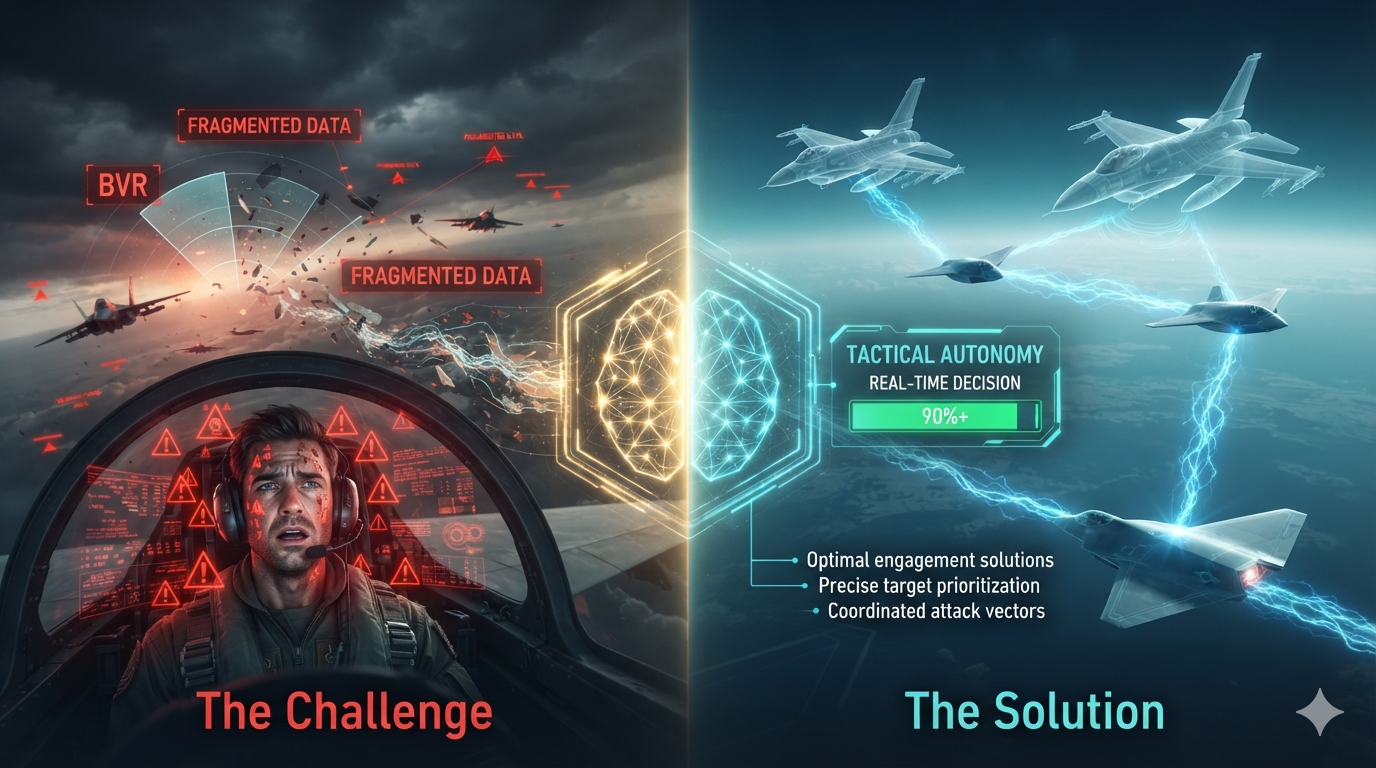
Beyond Human Reaction: How DARPA’s AIR Program Is Building AI for the Future of Beyond-Visual-Range Air Combat
Modern air superiority is no longer determined solely by aircraft performance, stealth characteristics, or missile range. Increasingly, victory depends on which side can observe first, understand the tactical picture fastest, coordinate distributed assets most effectively, and make engagement decisions before the adversary. As advanced sensors, long-range missiles, electronic warfare systems, and collaborative unmanned aircraft compress…
-

Beyond Detection: How DARPA’s Bio-Attribution Challenge Is Redefining Biothreat Intelligence and Genomic Forensics
Strategic Context: The Race to Attribute Engineered Biology The twenty-first century has witnessed a revolution in synthetic biology, genome editing, and artificial intelligence that is transforming medicine, agriculture, and biotechnology. The same technologies, however, are also reshaping biological security. Gene synthesis has become faster and cheaper, CRISPR-based editing has democratized genetic engineering, and AI-driven protein…
-
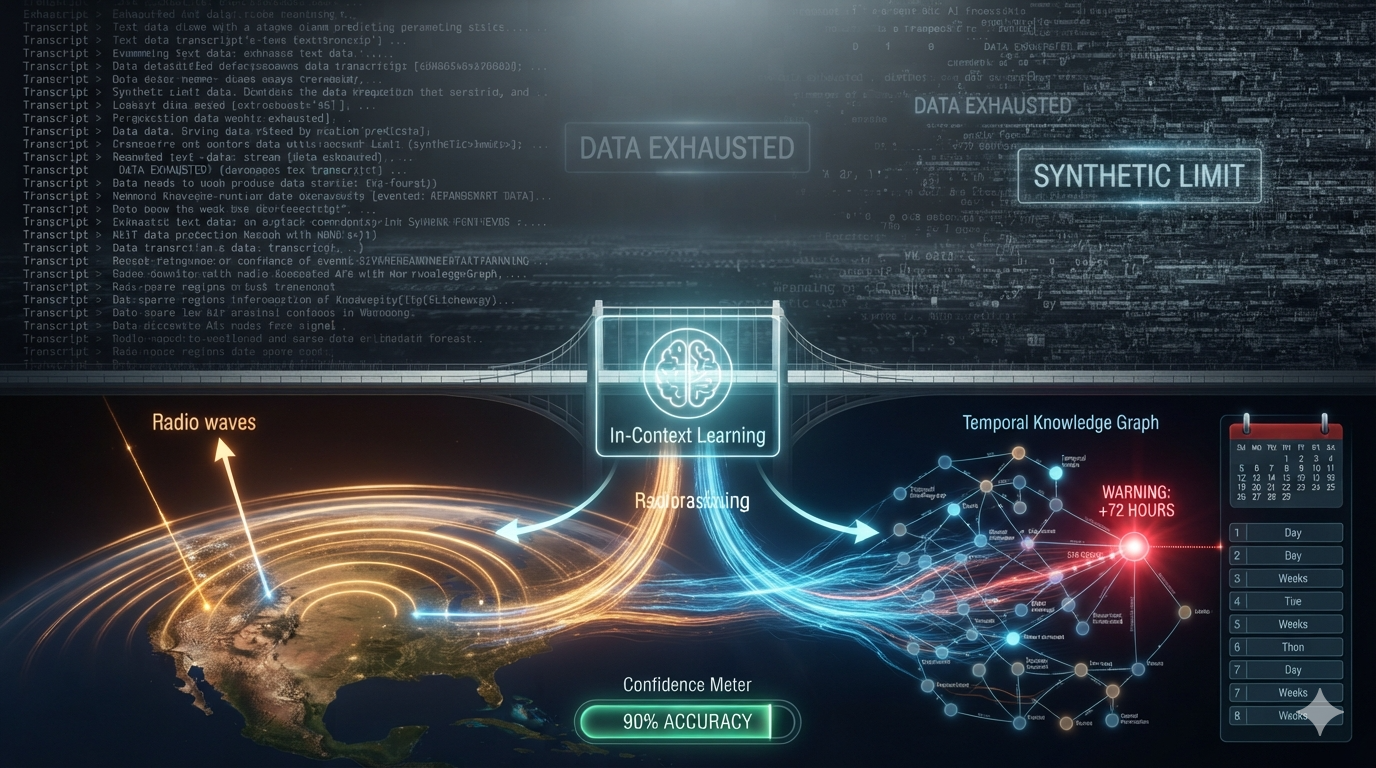
Beyond Open-Source Intelligence: How DARPA’s Novel Signals Initiative Could Transform AI-Powered Geopolitical Forecasting
Strategic Context: The Race for Predictive Intelligence Beyond the Data Wall For over a decade, artificial intelligence has transformed intelligence analysis by extracting patterns from vast repositories of news articles, satellite imagery, government reports, financial transactions, and social media. These advances have dramatically improved the speed of information processing, yet they have exposed a fundamental…
-
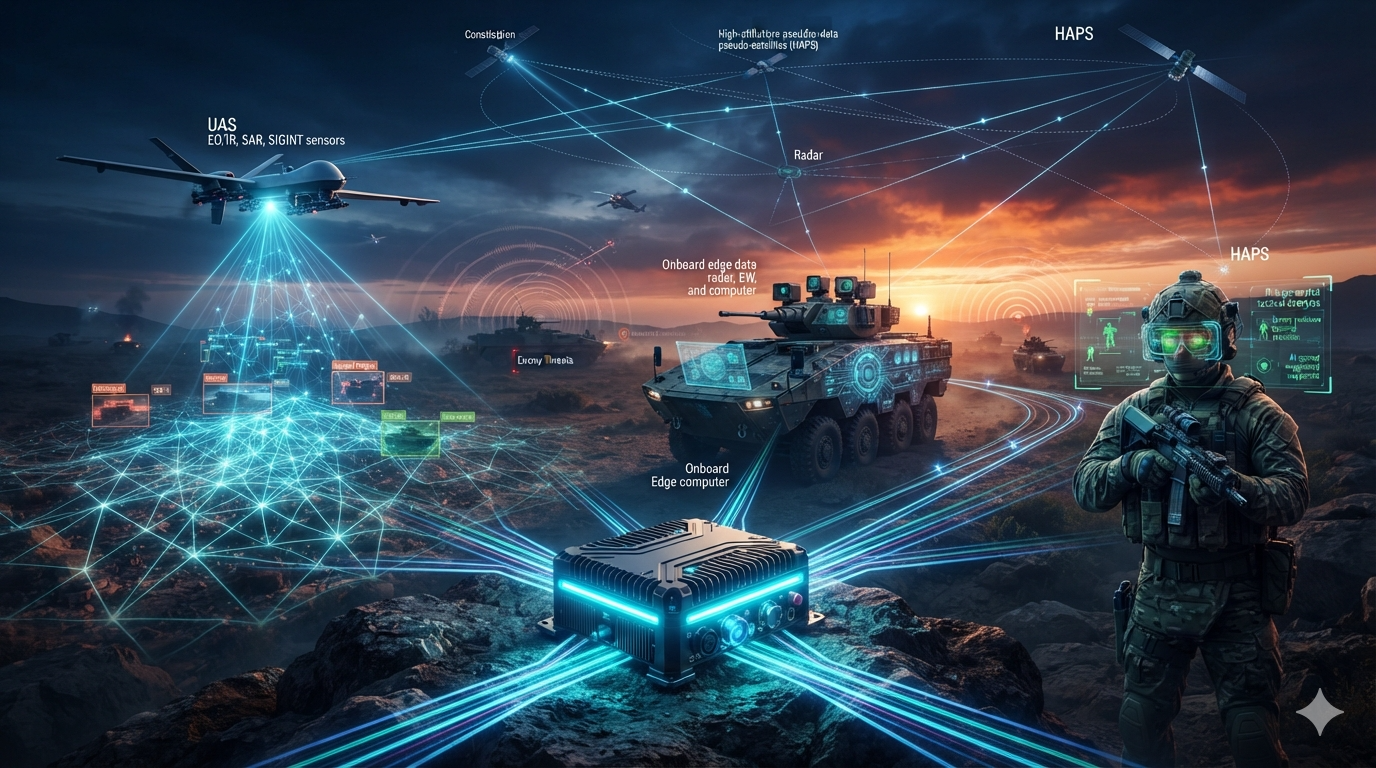
Eyes on the Edge: How AI-Driven Sensor Processing Is Reshaping the Future Battlefield
Introduction: From Data Deluge to Decision Dominance Modern warfare is no longer constrained by the availability of information—it is constrained by the ability to process it fast enough to influence the fight. Every military operation now generates an unprecedented volume of data from satellites, synthetic aperture radar, electronic warfare systems, unmanned aircraft, naval platforms, ground…
-

Silicon Photonics: The Optical Engine Driving the Next Generation of Artificial Intelligence
Introduction: AI’s Bandwidth Crisis and the Rise of Silicon Photonics Artificial intelligence has entered an era where computing performance is no longer determined solely by faster processors, but increasingly by the ability to move enormous volumes of data efficiently between chips, memory systems, and data centers. Modern foundation models containing trillions of parameters require unprecedented…
-
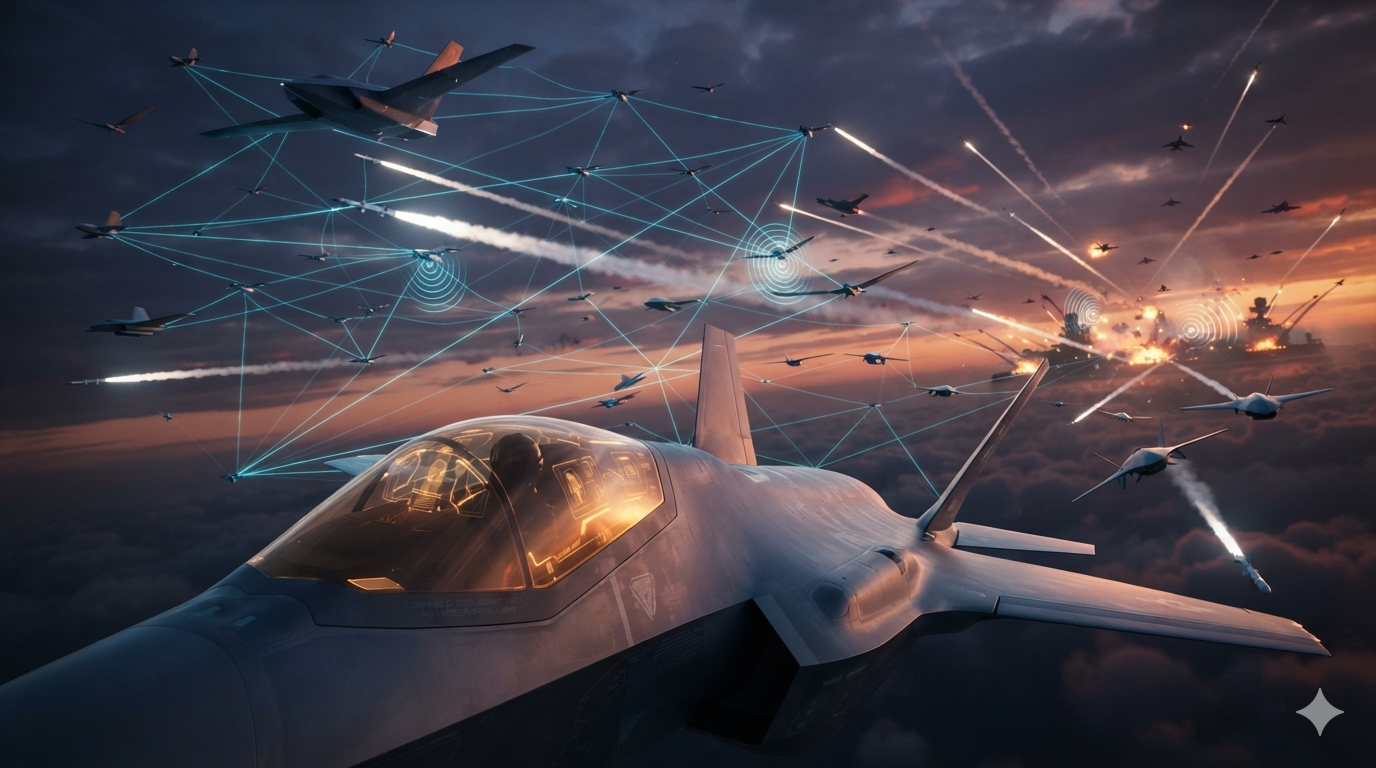
The Age of Autonomous Aircraft Swarms: How Collaborative Air Combat Is Reshaping Future Air Warfare
Strategic Context Air warfare is entering its most significant transformation since the introduction of stealth aircraft. The traditional model—where a handful of highly sophisticated fighters dominate the battlespace—is rapidly giving way to a distributed ecosystem of autonomous aircraft, collaborative drones, intelligent munitions, and AI-enabled command networks. Rather than relying solely on the capabilities of a…
-
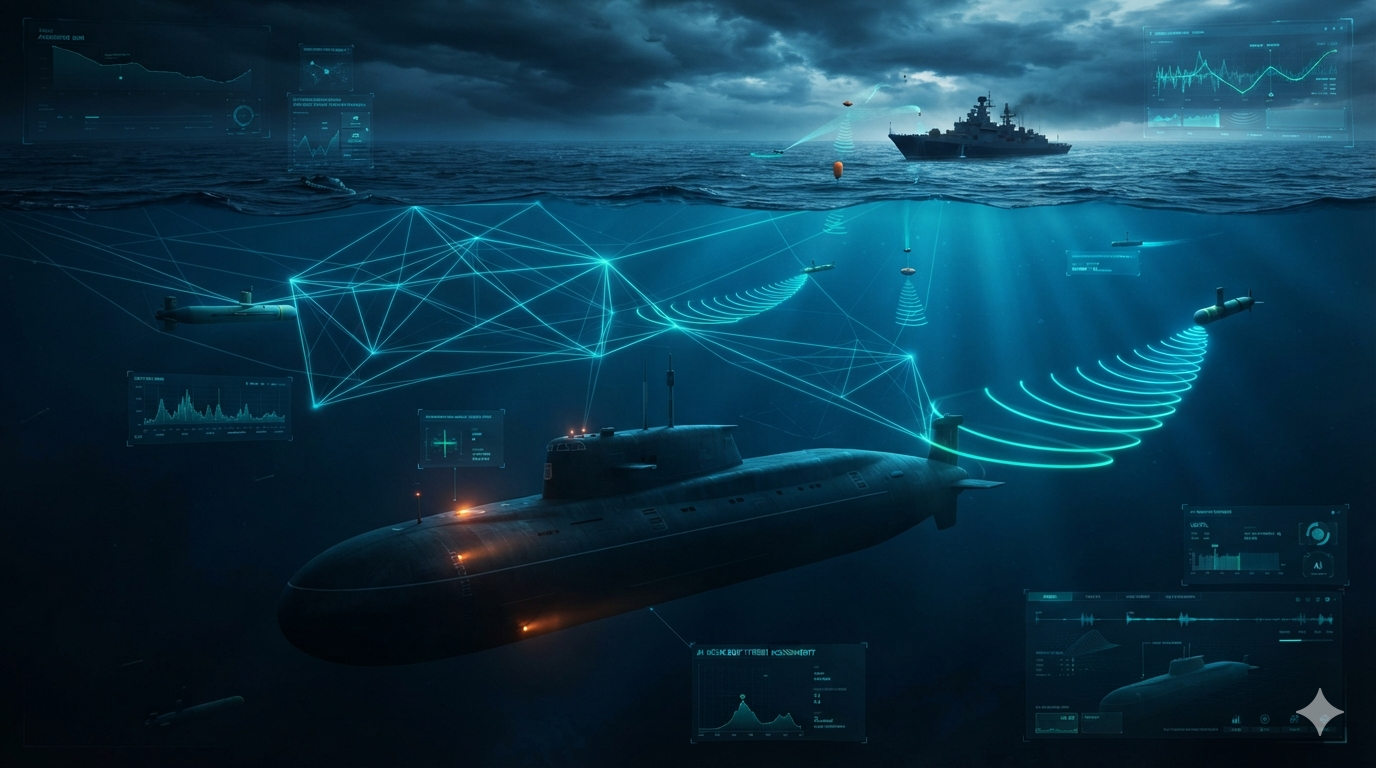
The Silent Hunt: How AI, Autonomous Sensors, and Distributed Sonar Networks Are Transforming Submarine Detection
Strategic Context The world’s oceans are rapidly becoming one of the most contested domains of strategic competition. As geopolitical tensions intensify across the North Atlantic, Arctic, Indo-Pacific, and Mediterranean, submarines have once again become indispensable instruments of deterrence, intelligence collection, precision strike, and nuclear second-strike capability. Russia continues to expand its fleet of ultra-quiet Yasen-M…
Related Domains & Cross-Cutting Themes
Emerging technologies rarely operate in isolation. Their real impact is shaped by integration, governance, and human-system interaction. Cyber security and information warfare, electronic and sensor systems, command and control, autonomous platforms, governance and ethics, and long-term strategic competition
Ethics, governance, and technology control
Industrial scaling and supply-chain constraints
Human–machine teaming and trust
Interoperability across platforms and institutions
Export controls and technological rivalry
Explore the Critical & Emerging Technologies Magazine →
Explore the Industry, Markets & Supply Chains Magazine →
Explore the Space Technology, Defense & Exploration Magazine →